|
|
Topics in Cell Biology Educational Poster Series
teaching resources for the science classroom and home schoolers.
|
science posters > biology > cells > cell biology topics
|
|
The Key Topics in Cell Biology posters series highlight important structures and processes with labeled diagrams and descriptive text: animal cell, bacteria cell, plant cell, cell specialization, cell respiration, meiosis, mitosis & cytokinesis, DNA & RNA, photosynthesis, active and passive transport.
|
|
|
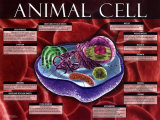
Animal Cell
Illustration and text:
Enoplasmic Reticulum (Rough & Smooth), Golgi Apparatus, Cytoplasm, Ribosomes, Plasma Membrane, Mitochrondrion, Lysosome, Centridle, Chromatin, Nucleolus, Nuclear Envelope, Nucleus
• animal posters
|
|
|
|
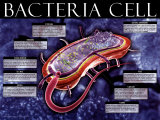
Bacteria Cell
Illustration and text:
Cytoplasm, Ribosomes, Plasma Membrane, Cell Wall, Capsule, Plasmid, Flagellum, Pilus, Bacterial Chromosome
|
|
|
|
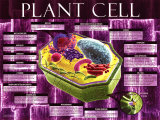
Plant Cell
Illustration and text:
Nucleus, Nuclear Envelope, Nucledlus, Chromatin, Ribsomes, Lysosome, Endoplasmic Reticulum (Smooth & Rough), Chloroplasts, Mitochondrion, Plasma Membrane, Cell Wall, Golgi Apparatus, Cytoplasm, Vacuole
• botany posters
|
|
|
|
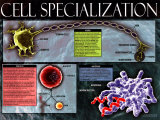
Cell Specialization
Illustration and text:
Neuron - Nerve cells
Nerve cells, or neurons, are among the largest cells known. Neurons that run down the neck of a giraffe can be nine to ten feet (three meters) long. Neurons transport chemical and electrical impulses throughout the body. An electrical impulse is received by the dendrites and moves toward the cell body, which process the signal and sends it along the axon toward another cell. At the axon tip chemical neurotransmitters are released, carrying the impulse across the synapse to the dendrites of a neighboring neuron. The longer the meuron, however, the fewer times this chemical transmissions must take place. tThis increased the speed of impulse transission. Some neurons have specialied insulating Schwann cells that speed the electrical implse along the axon.
Stem Cells
Stem cells are the source of all body tissue, and they can produce any of the many types of cells in an orgnism. Humans and most other multicellular organisms retain a stockpile of stem cells within their organs to be used for growth and repair of damaged tissue. However, research has indicated that older stem cells may not be as versatile as younger cells. The youngest and therefore most versatile are those produced just after the fertilization of an ovum by a sperm cell in the process of sexual reproduction.
Almost four days after the fertilization of a human ovum, the newly fertilized cell (zygote) will have grown into a spherical cluster of cells called a blastocyst. Inside the sphere of cells is a cluster of stems cells. These are the cells that will eventually divide, change, and grow into the many organs in the human body.
Because of their ability to repair damaged tissue, stem cells might one ay lead to the effective teatment of diseases like Parkinson's and Alzheimer's. Treatment of these and other neurological disorders is difficult in part because of the inability of nerve tissue to grow new cells and repair itself.
However, embryonic stem cell research is controversial. Because blastocysts would produce a human being if allowed to grow in a appropriate environment, some see the use of embryonic stem sells as the destruction of human life.
Macrophages are important defensive cells present in all vertebrates and they are found both flowing freely in the bloodstream and attached to connective tissue. Wtih their flexible cell membranes, macrophage are able to flow around and engulf any foreign bodies they encounter. Through the digestive action of numerous lysosomes macrophages break down unwanted material, like damaged tissue or invading bacteria. This process is called phagocytosis or “cell eating.”
|
|
|
|
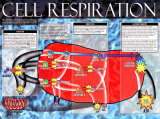
Cell Respiration
Cellular respiration is a series of controlled reactions in which complex molecules are broken down into darobn dioxide and water, and energy is released. Some of the energy is conserved on ATP molecules. In turn, ATP powers most of the working processes of the cell. ... Glycolysis, Krebs Cycle, Electron Transport.
|
|
|
|
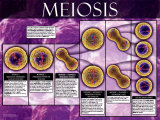
Meiosis - The process of meiosis begins with a single cell containing 46 chromosomes and results in four reproductive cells (sperm or eggs), each of which carries 23 chromosomes. These four cells carry a combination of genes on their 23 chromosomes in a unique mix of the genes present in the original single cell.
|
|
|
|
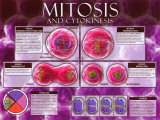
Cytokinesis, the division of the cytoplasm and cell membrane of a cell, usually occurs after the nuclear genetic division in the mitosis or meiosis process.
|
|
|
|
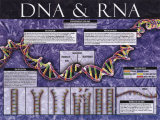
DNA & RNA
Illustration and text: Deoxyribonucleic Acid, DNA Structure, Portein Synthesis, Nucleotide, DNA Replication, DNA & RNA Bases, Ribonucleic Acid
• genetics posters
|
|
|
|
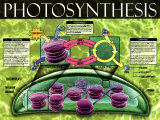
Photosynthesis
Nearly all life depends on the biochemical process photosynthesis (photo=light, synthesis=putting together), is the production of glucose from the combination of sunlight, carbon dioxide and water, with oxygen as a waste product.
• more sun posters
|
|
|
|
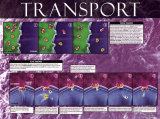
Active and Passive Transport
Poster text:
• Passive Transport - All cells perform passive transport. It is passive because the cell does not expend any energy (in the form of ATP) to move a particular molecule or ion across its membrane. Passive transport is generated by the principle of diffusion. Driven only by the natural energy of atoms as they bounce off each other, diffusion is the tendency of molecules of one type in a solution to move from an area of greater concentration to an area of lesser concentration until equilibrium is reached. When this occurs across the membrane of a cell, it is called transport. If the diffusing molecules are H2O (water), the process is called osmosis. The membrane of a cell is selectively permeable, meaning that only some types of molecules (commonly water) are allowed to move through in either direction.
• Active Transport takes place when a cell requires that molecules be moved against the natural flow of diffusion. In this process transport proteins embedded in the cell's membrane by shape to specific types of molecules. Using energy supplied by the cell (in the form of ATP), the transport proteins move molecules through the membrane. Active transport often involves the movement of two different types of molecules in opposite directions, with the end result being the return on the transport portion to its initial shape.
• more ecology posters
|
|
|
previous page | top
|
|
I have searched the web for visual, text, and manipulative curriculum support materials - teaching posters, art prints, maps, charts, calendars, books and educational toys featuring famous people, places and events - to help teachers optimize their valuable time and budget.
Browsing the subject areas at NetPosterWorks.com is a learning experience where educators can plan context rich environments while comparing prices, special discounts, framing options and shipping from educational resources.
Thank you for starting your search for inspirational, motivational, and educational posters and learning materials at NetPosterWorks.com. If you need help please contact us.
|
|
|