|
|
Animal Friends Posters, Prints & Charts Index
Educational posters, prints and charts of animal friends; for the classroom and home.
|
science posters > biology > zoology > ANIMALS < social studies
|
An animal is a member of the kingdom Animalia of living things, both multicellular and single cell organisms (protozoans) that
- have a well-defined shape
- usually limited growth,
- can move voluntarily,
- actively acquire food and digest it internally, and
- sensory and nervous systems that allow them to respond rapidly to stimuli
Animals differ from plants in that their cells do not have cellulose walls, they lack cholorphyll and thus the capacity for photosynthesis, and they can locomate.
The word “animal” comes from the Latin “anima”, meaning vital breath or soul; Carl Gustav Jung uses the word anima for female soul image and the word animate means to enliven (i.e. animated cartoons). When the word “animal” is used in a biological sense, humans are included; in everyday usage, “animal” usually refers to non-human animals. The study of animals is zoology.
Animal pets, such as cats and dogs, are companions; horses, oxen, elephants and dogs have been trained to provide work service; other animals, both wild and domesticated, interact with humans as food sources.
The experiemental psychologist Harry Harlow is said to be responsible for the animal liberation movement.
• “Our perfect companions never have fewer than four feet.” ~ Colette
• “We have enslaved the rest of the animal creation, and have treated our distant cousins in fur and feathers so badly that beyond doubt, if they were able to formulate a religion, they would depict the Devil in human form.” ~ William R. Inge
• “He who is cruel to animals becomes hard also in his dealings with men. We can judge the heart of a man by his treatment of animals.” ~ Immanuel Kant
• “Ideas are like rabbits. You get a couple and learn how to handle them, and pretty soon you have a dozen.” ~ John Steinbeck
• “A man can live and be healthy without killing animals for food; therefore, if he eats meat, he participates in taking animal life merely for the sake of his appetite.” ~ Leo Tolstoy
• “Man is the only animal that deals in that atrocity of atrocities, War. He is the only one that gathers his brethren about him and goes forth in cold blood and calm pulse to exterminate his kind. He is the only animal that for sordid wages will march out ... and help to slaughter strangers of his own species who have done him no harm and with whom he has no quarrel ... And in the intervals between campaigns he washes the blood off his hands and works for ‘the universal brotherhood of man’ - with his mouth.” ~ Mark Twain
• “The fate of animals is of greater importance to me than the fear of appearing ridiculous; it is indissolubly connected with the fate of men.” ~ Emile Zola
|
|
|
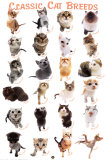
Domesticated cats, in the mammalian Order Carnivora, family felidae (feline), have been kept by humans for millenia as skilled predators to protect stored grains from rodent destruction.
|
|
|
|
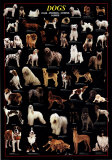
Domesticated dogs, in the mammalian Order Carnivora, family canidae (canine), are closely related to wild dogs such as the Dingo, and coyotes, wolves, and jackals; foxes are of the vulpes genus (vulpine).
|
|
|
|
Horses, in the suborder Hippomorpha, family equidae, are large, grazing, and fast running, odd-toed ungulates (hoofed) with long legs and one toe.
|
|
|
|
Animal Anatomy posters
Bovine - cow
Canine - dog
Feline - cat
Equine - horse
|
|
|
|
Aquarium Fish
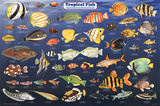
An aquarium is a transparent container of water-dwelling plants or animals. Fishkeepers use aquaria to keep fish, invertebrates, amphibians, marine mammals, and aquatic plants. The word aquarium is a combination of the Latin root aqua = water + arium = “a place for relating to”.
• marine & aquatic animals posters
|
|
|
|
|
|
|
|
|
|
Animal Cell
Illustration and text:
Enoplasmic Reticulum (Rough & Smooth), Golgi Apparatus, Cytoplasm, Ribosomes, Plasma Membrane, Mitochrondrion, Lysosome, Centridle, Chromatin, Nucleolus, Nuclear Envelope, Nucleus
• more cell posters
|
|
|
|
|
|
|
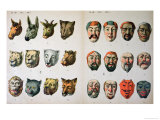
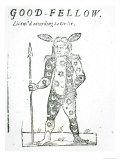
Human and Animal Carnival Masks in a page of a manufacturer's catalogue from Mannebach, Thuringe.
• more masks posters
|
|
|
|
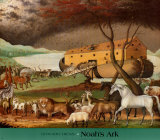
The story of Noah's Ark, (Book of Genesis 6-9) begins with God deciding to flood the Earth and destroy all Life after seeing how his creation, Man, was behaving. God did find one good man, Noah, "a righteous man, blameless among the people of his time." He then commanded Noah to build an ark and bring his wife, their sons and their wives, and a male and female of all the animals and birds, as well as food, to survive the Great Flood. The story is also in the Qur'an.
• Peace Education posters
• Edward Hicks, Lion Lies Down with the Lamb, lesson plan
• Noah Alphabet poster
|
|
|
|
I AM A VET-
I like animals and they like me! Dogs, cats, rabbits, horses ... you name it. Taking care of animals is important, and I want to learn everything I can about the different species. If I work hard and pursue my dream, someday people will trust me to help keep their pets healthy and happy. I have the power to be somebody!
Related careers: Veterinary Technician / Animal Caretaker / Pet Groomer / Animal Trainer
• "I'll Be Somebody" posters
• career ideas posters
• health posters
|
|
|
|
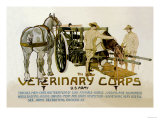
Veterinary
According to the American Medical Veterinary Association nearly three-fourths of veterinarians work in private medical practices and treat small companion animals, such as dogs, cats, birds, reptiles, rabbits, ferrets, and other animals that can be kept as pets. About 25% of all veterinarians work in mixed animal practices, where they see pigs, goats, cattle, sheep, and some wild animals in addition to companion animals.
• more WW I posters
|
|
|
|
|
previous page | top
|
|
I have searched the web for visual, text, and manipulative curriculum support materials - teaching posters, art prints, maps, charts, calendars, books and educational toys featuring famous people, places and events - to help teachers optimize their valuable time and budget.
Browsing the subject areas at NetPosterWorks.com is a learning experience where educators can plan context rich environments while comparing prices, special discounts, framing options and shipping from educational resources.
Thank you for starting your search for inspirational, motivational, and educational posters and learning materials at NetPosterWorks.com. If you need help please contact us.
|
|
|