AQUATIC/MARINE/
OCEANOGRAPHY POSTERS-

conchology-shells
crustaceans & mollusks
ichthyology I- freshwater
ichthyology II- saltwater
ocean maps
reptiles & amphibians
sharks & rays
whales & dolphins

OCEANOGRAPHERS
Rachel Carson
Jacques-Yves Cousteau
Georges Cuvier
Johannes Peter Muller
Don Walsh

SCIENCE KITS


READING ABOUT
WHALES & DOLPHINS
Whales, Dolphines and Porpoises Handbooks, Smithsonian
Smithsonain Handbooks: Whales Dolphins & Porpoises

Blue Planet
Blue Planet

Dolphin Chronicles
Dolphin Chronicles

Starting Your Career as a Marine Mammal Trainer

Whale Rider
Whale Rider

Moby Dick: or, The Whale
Moby Dick

Do Whales ...?
Do Whales Have Belly Button? Questions & Answers About Whales & Dolphins

Whale Pool Float
Whale Pool Float


MARINE
CALENDARS

Whales & Dolphins Calendars

Oceans Calendars
Oceans Calendars


Tropical Fish Calendars
Tropical Fish:
Calendars


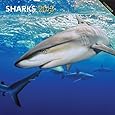
Sharks Calendars
Sharks
Calendars


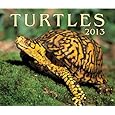
Turtles Calendars
Turtles
Calendars

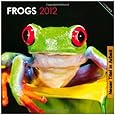
Frogs Calendars
Frogs
Calendars


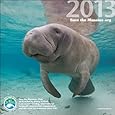
Manatees Calendars
Manatees:
Calendars


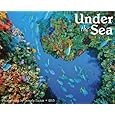
Under the Sea Calendars


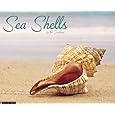
Shells Calendars
Shells
Calendars


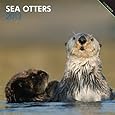
Sea Otters Calendars
Sea Otters:
Calendars


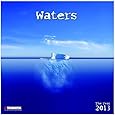
Water Calendars
Waters
Calendars


WallFile™ Portfolio System WallStand™ Starter Kit


Teacher's Best - The Creative Process

Whales & Dolphins Educational Posters & Charts
for ocean, water and ecological studies.


science > biology > zoology > mammals > whales & dolphins posters < aquatic world


Whales, dolphins and porpoises are aquatic mammals, warm blooded vertebrate animals.


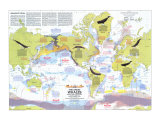
Great Whales, Migration and Range Map, Giclee Print
Great Whales, Migration
and Range Map, Giclee Print

Nomads of the Sea

Despite their gigantic size, whales are among the least understood of earth's creatures. they exist untamed and usually unseen in the trakless ocean, only in the past century has man begun to fathom their lives and travels.

This National Geographic map represents an ambitious effort to chart their ranges and migrations. Shaded areas distinguish the home waters of six species of the great whales: fin, humpback, sperm, gray, bowhead, and right. ...

The hunting of whales as a commercial pursuit began in the Middle Ages when Basque seamen in small craft harpooned right whales migrating down the French and Spanish coasts. Shore whaling also existed in medieval Japan, and spread to northern Europe and the east coast of North America by the end of the 17th century. In the 19th century deep-sea whaling boomed as a major enterprise, with hundreds of sailing ships ranging the oceans. At the sight of a spout, oar-driven boats would be dropped into the water. Whalers armed with harpoons and lances would attack the powerful beast, whose oil would light their countrymen's lamps.

In modern times the scene shifts to a swift, diesel-powered catcher boat, from whose bow a man fires an explosive-tipped harpoon into a hapless whale. A factory ship then strips the carcass in less than an hour for its tons of meat earmarked for use as human or animal food, and its oil, used in margarine, cosmetics, and industrial lubricants.

Ironically, most of what we know about the whales' movement and habits comes from this deadly whaling experience. The six species already mentioned, together with the prodigious blue whale, have long stempted man with their abundant yields of oil and meat, and, as a result, have lured ships across the seven seas. From these voyages have come valuable accounts of whale distribution. Zoologist Charles Townsend, for example, made a singular contribution to the study of whales when, in the 1930s, he charted in great detail the times and places of kills made by hundreds of whaling vessels. Tagging studies, undertaken during the era of modern whaling, have also furnished information on the direction and timing of cetacean movements.

By the 1940s many great-whale populations had suffered serious, and in some cases, devastating losses. Confronted with dwindling numbers, whaling nations in 1946 formed the International Whaling Commission (IWC). This agency is responsible for the conservation of the world's whales through hunting bans for some species, kill quotas for others, size limits, monitoring catches, and exchange of scientific information.

The self-interest of its membership and lack of enforcement poswers, however, limited the IWC's effectivemess until recently. In the past five years the 16-member body has lowered quotas by 40 percent, and the Soviet Union and Japan, the world's two principal whaling nations, are now abiding by the ceilings. The major whaling countries that remain outside the IWC – Spain, Portugal, Peru, Chile, and South Korea – account for less than 10 percent of the catch, and are under pressure to join the league.

The latest quotas theoretically assure that all species of great whales will surivive. What probably will become extinct is the whaling industry, victim of the mounting costs and a growing number of substitutes for whale products. Perhaps then, Herman Melville's estimation of the whale as the earth's more durable creature will prove something more than a heady dream: “... if ever the world is to be again flooded ... then the eternal whale will still survive, and rearing upon the topmost crest of the equatorial flood, spout his frothed defiance to the skies.”


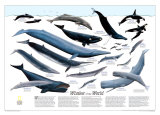
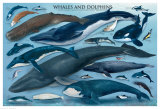
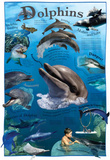
Whales and Dolphins Poster
Whales and Dolphins
Poster

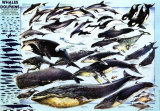
 Whales & Dolphins, Poster
Whales & Dolphins,
Giclee Print

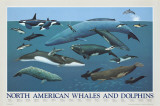
North American Whales & Dolphins Poster
North American Whales & Dolphins
Poster
 Whales & Dolphins, Giclee Print
Whales & Dolphins,
Giclee Print

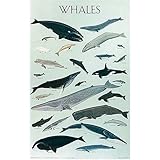
Whales, Poster
Whales,
Poster
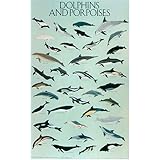
Dolphins & Porpoises, Poster
Dolphins & Porpoises,
Poster

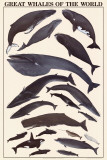
Great Whales of the World, Art Print
Great Whales of the World,
Art Print

Whales of the World Map, Art Print
Whales of the World Map,
Art Print

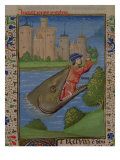
Jonah and the Whale, Giclee Print
Jonah and the Whale,
Giclee Print


The story of Jonah is from the Hebrew Old Testament, and repeated by Jesus in the New Testament.

God commands Jonah to visit the city of Ninevah and call upon them to repent and submit to God.

The commission from God strikes fear in Jonah, and thinking he can hide from God, boards a ship to escape. God stirs up a terrible storm and the sailors decide to throw Jonah overboard in order to save themselves.

A large fish swallows the floundering Jonah and he spends three days in its belly, finally praying and agreeing to go to Ninevah. God then has the great fish throw Jonah up on shore. The Hebrew for great fish was translated to whale.


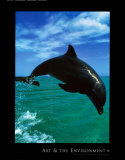
Bottlenose Dolphin Poster Art and the Environment
Bottlenose Dolphin Poster
Art and the Environment

Bottlenose Dolphin
Art and the Environment


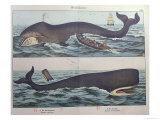
Whaling and Sperm Whale, from 'Natural History of Mammals'. Giclee Print
Whaling and Sperm Whale,
from 'Natural History
of Mammals'.
Giclee Print

Whaling and Sperm Whale, from 'Natural History of Mammals'.

• Did you know the sperm whale is the state animal of Connecticut?


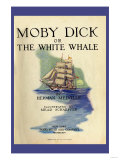
Moby Dick or The White Whale, Giclee Print
Moby Dick or
The White Whale,
Giclee Print

Moby Dick or The White Whale

• more Herman Melville posters


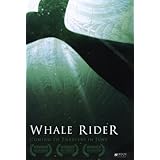
Whale Rider Movie Poster
Whale Rider
Movie Poster

Whale Rider, a 2002 New Zealand film about the tradition that the leader should be the first-born son — a direct patrilineal descendant of Paikea who rode atop a whale from Hawaiki. However, the last of the line is the girl Pai and technically cannot inherit the leadership.


Constellation of Cetus the Whale, Giclee Print, from 'Atlas Coelestis', Published in 1729
Constellation of Cetus the Whale, from ‘Atlas Coeletis’, 1729
Giclee Print

John Flamstead

Cetus is a constellation in the northern sky and refers to a sea monster in Greek mythology, although it is often called ‘the whale’ today.

Cetus, located in the region of the sky known as the Water, is neighbors with other watery constellations such as Aquarius (water carrier), Pisces (fish), and Eridanus (river, described by Ptolemy as pouring from Aquarius).


previous page | top

I have searched the web for visual, text, and manipulative curriculum support materials - teaching posters, art prints, maps, charts, calendars, books and educational toys featuring famous people, places and events - to help teachers optimize their valuable time and budget.

Browsing the subject areas at NetPosterWorks.com is a learning experience where educators can plan context rich environments while comparing prices, special discounts, framing options and shipping from educational resources.

Thank you for starting your search for inspirational, motivational, and educational posters and learning materials at NetPosterWorks.com. If you need help please contact us.


NPW home | Global PathMarker Collection | APWTW Blog | faqs-about | contact | search | privacy
links for learning & curriculum ideas | bookshelves | toybox | media | ecards | quotes

NetPosterWorks.com ©2007-2011 The Creative Process, LLC All Rights Reserved.

last updated 8/1/11