|
|
State of Connecticut Posters, Prints, Photographs, Calendars
for educators and home schoolers, themed decor in studio or office.
|
geography > NA > US > NE > CONNECTICUT < social studies
|
|
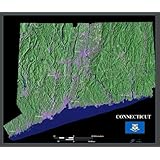
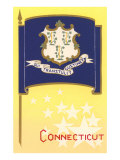
Connecticut, known as the “Constitution State” (and unofficially nicknamed the Nutmeg State), joined the Union on January 9, 1788 as the 5th state. The name Connecticut comes from Quinnehtukqut -- Mohegan for “Long River Place” or “Beside the Long Tidal River”. Connecticut, in the US Census Bureau's New England Division of the Northeast Region, is bordered by Massachusetts on the north, New York on the west, the Long Island Sound on the south and Rhode Island on the east.
|
|
|
|
Connecticut may be the least “Yankee” of the New England states. New York's sophistication has seeped in on rails and highways that link commuters' offices with homes many miles up the coast. Before the commuter came the immigrant, drawn by labor-hungry mills. His heirs enrich New England's heritage with a rainbow of ethnic shadings, evident in foreign-language radio programs, old-country festivals, and bounteous dishes that delight the palate while their names challenge the tongue.
And yet Connecticut retains much of its Yankee flavor. You can still drive over a sampling of “kissing bridges,” the covered spans that have become a New England trademark. Dozens of towns have proudly desginated historical districts where owners of old houses – and even of new ones – may not change so much as a porch railing witout approval. And beyond the immediate reach of Connecticut's cities you can take back roads through undulating farmlands and cathedral forest, pause on shady village greens, bid on a treasure at a country auction or sprawling flea market, fill up and bed down in an inn that has welcomed wayfarers for a century, maybe two.
If you prefer broad, fast, green-belted expressways, try the Merritt Parkway. This route, planned in the '20s when the idea of parkways was new, may be a few minutes slower than the parallel Connecticut Turnpike. But its scenery is greener, its tolls lower, its many bridges a delight – each of different design, an interplay of concrete, wrought iron, and sotne hardly to be savored by a passing glance.
Connecticut offers its past in an array of unique museums: clocks, trolleys, locks, postcards, tools ,dinosaur footprints, even a nut museum. In some, you're part of the exhibit; you can ride the trolleys or make yor own take-home casts of the foot prints. Goodspeed Opera House in East Haddam is itself a museum piece, a stately Victorian wedding cake mirrored in the state-splitting Connecticut River – but the show you see inside may be a Broadway hit.
What the moutains are to northern New England, the sea is to the south; its indelible signature stamps every chapter of history. One chapter lives anew at Mystic Seaport: the lusty era of sail when wooden whalers put to sea and returned years later or perhaps not at all. Fortunes came home with the Charles W. Morgan, now she sits serenely under your feet as you gaze from her decks at the reproduced town her sailors could call home.
(poster text about Connecticut)
|
|
|
|
|
|
|
|
|
|
|
|
|
USS Nautilus, First Atomic Submarine, Groton, CT
(Connecticut State Ship)
• The Atom poster
|
|
|
|
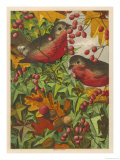
The Robin, the State Bird of Connecticut, is found throughout the United States and Canada. Robins have distinctive “red breast” and lay blue eggs. The Robin is a migratory songbird in the thrush family that eats insects and earthworms. The robin, one of the first signs of spring, is also the state bird of Michigan and Wisconsin.
And then the robin has its own song- tweet, tweet, tweet! Rockin' Robin by Bobby Day CD
• more birds posters
|
|
|
|
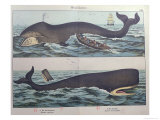
The Sperm whale is the State Animal of Connecticut. In the 1800s Connecticut whalers sailed the world to bring back whale oil for lamps and baleen used to manufacture buggy whips, parasol ribs and stiffen women's corsets.
•
Whales of the World Map Poster
|
|
|
|
|
|
|
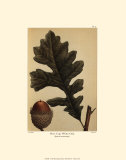
The Charter Oak, a very large and prominent white oak tree, is Connecticut State Tree. The Charter Oak, already a prominent landmark with native people before English colonists began clearing land, earned its name because its hollow trunk concealed Charles II's 1662 Charter from the agents of James II who wished to revoke the Charter in 1687. The old oak fell in a severe 1856 storm.
|
|
|
|
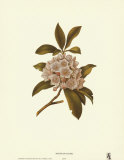
The Mountain Laurel, the Connecticut State Flower, is a flowering evergreen shrub that is native to the eastern United States, naturally found on rocky slopes.
The star shaped flowers occur in clusters and range in color from white to pink to red. All parts of the Mountain Laurel are poisonous.
|
|
|
|
Praying Mantis, the Connecticut State Insect, are excellent natural pest control agents as they do not eat plants but eat other bugs that eat plants. They is named “praying” because of their prayer-like posture.
|
|
|
|
|
|
|
Northeast Native American Cultures -
The northeastern part of the U.S. and Canada includes coastal lands, rivers, the Great Lakes, valleys and mountains. before the arrival of European settlers, this region was mostly one vast forest. In these woodlands teeming with deer, bear, rabbit, and other animals, most of the Indians were hunters and gatherers. They also fished in the lakes and rivers. In wet marshy areas Indians gathered wild rice. And in the summer, some tribes planted crops of corn, squash, and beans. ... • more Native American Cultures posters
|
|
|
|
New England Colonies - 1650
Poster Text: During the first half of the 17th century, thousands of English families creossed the Atlantic Ocean to escape the hardships of living in England, They were fleeing religious persecution and strict rule of King James I and, later, his son Charles I. Both believed in the "divine rights of kings" and ruled with absolute power. And both kings threatened anyone who questioned their authority or the power of the English church. Unhappy with their life in England, many families chose to make the dangerous journey across the Arlantic to the New World, where they hoped to find peace and religious freedom. Although life in the rugged New England wilderness was hard, families created strong communities there. Men hunted, cleared the land, built homes, and formed churches. And women, often with the help of their children, grew vegetables, dried fish, and raised animals for food and clothing, By 1650, New England was the richest region in the colonies.
Two groups of English Protestant settled in New England, where they hoped to establish their own churches and live freely according to their religious beliefs. The Pilgrims broke from the Church of England in 1607. They traveled on the Mayflower in search of a safe home for their religious community, landing in Plymouth, Massachusetts, in December of 1620. Because they had separated completely from the English church, the Pilgrims were also called "Separatists." The second group was the Puritans. Unlike the Pilgrims, the Puritans had not split completely from the Church of England. The strong faith of both the Pilgrims and the Puritans helped them survive outbreaks of disease and the harsh New England winters. But life in the Massachusetts Bay Colony was not always peaceful. big arguments, usually about religion, forced some people to move from Massachusetts and set up their own settlements elsewhere. These settlements eventually became the remaining New England colonies of Connecticut, Rhode Island, and New Hampshire.
Native Americans helped the early New England colonists survive. They taught the new settlers many necessary skills, such as how to build animal traps, use fish heads for fertilizer, and construct birch bark canoes. Indians also introduced the settlers to many important foods, including corn, potatoes, tomatoes, pumpkins, and beans, The colonists traded with the Indians, exchanging tools, pots, guns, and horses for animal fur. But conflicts between the Indians an settlers grew as more and more settlers arrived, forcing native tribes to move from their land. These conflicts would explode over the next 250 years.
|
|
|
|
Nathan Hale
b. 6-6-1755; CT
d. 9-22-1776; hung by the Bristish as a spy, possibly the corner of 3rd Ave & 66th St, Manhattan.
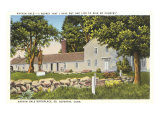
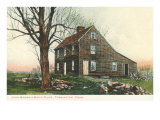
Nathan Hale was a teacher in East Haddam and New London, CT, after he graduated from Yale, and before joining the Continental Army for the American Revolutionary War. He is reported to have said, “I only regret that I have but one life to give my country.”
Nathan Hale is the State Hero of Connecticut.
|
|
|
|
|
|
previous page | top
|
|
I have searched the web for visual, text, and manipulative curriculum support materials - teaching posters, art prints, maps, charts, calendars, books and educational toys featuring famous people, places and events - to help teachers optimize their valuable time and budget.
Browsing the subject areas at NetPosterWorks.com is a learning experience where educators can plan context rich environments while comparing prices, special discounts, framing options and shipping from educational resources.
Thank you for starting your search for inspirational, motivational, and educational posters and learning materials at NetPosterWorks.com. If you need help please contact us.
|
|
|