|
|
State of Rhode Island Posters, Prints, Photographs, Calendars
for educators and home schoolers, themed decor in studio or office.
|
geography > NA > US > NE > RHODE ISLAND < social studies
|
|
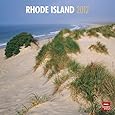
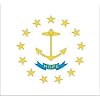
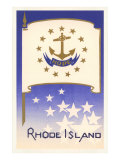
Rhode Island, known as the Ocean State, was one of the original 13 rebelling colonies and joined the Union on May 29, 1790 as the 13th state. The official name of the smallest state is the State of Rhode Island and Providence Plantations and most of the area is on the mainland, not an island.
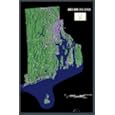
Rhode Island is bordered on the south by the Rhode Island Sound of the Atlantic Ocean, to the west by Connecticut, and the north and east by Massachusetts, with a water border with New York.
|
|
|
|
|
|
|
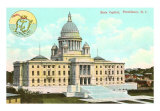
“Four gallons long, three gallons wide,” an ad advises gas-conscious drivers. Yet the nation's smallest state stands tall among vacation spots, for it offers a wealth of choices. Narragansett Bay and the waters off Block Island conjure Eden for angler and sailor; it's no accident that yachting's most prestigious races begin at Newport. Old homes, historic sites, and city lights await the visitor to Providence, the state capital.
“South County,” as natives call Washington county in the southern part of the state, leads the wanderer down winding lanes through woodlands and marshes, now and then opening on a still-grinding mill or even a village where Indians live, descendants of the first inhabitatnts. Though Rhode Island's rooftop is a hill only 812 feet high, the state has no less than four ski area; they may lack the north's scenic vistas, but they lack the crowds as well.
Narragansett Bay thrusts deep into Rhode Island's eastern flank. A scattering of islands breaks up the broad expanse of water into bays and channels that shelter small boats and give their crews a measure of solitiude. Commerical fishermen cluster in such seaside villages as Jerusalem and Galilee. But from almost any harbor a sport fisherman can shove off for a deep-sea try at swordfish, marlin, striped bass, tuna. Land lubbers can cast for stripers at thousands of spots along the state's 384-mile shoreline.
Bay and ocean together lap more than a hundred swimming beaches. Among the finest is the strand at Watch Hill, for generations a playground of the rich and the famous.
Another Rhode Island treat is the famous Yankee clambake, a savory wedding of seafoods and other delicacies, smothered by seaweed and slowly sizzled by hot rocks right on the sand of a beach. That's the old way, and it's best– but even if from a steaming pot or from cans over a picnic fire the traditional shore dinner handed down from the Indians makes a meal a memory. Enjoy it with another tradition: Rhode Island johnnycakes, made of white cornmeal as in centuries past when travelers stocked up on “journeycakes.”
Take some with you as you cut a cross section of Rhode Island on State 138. From quaint, rustic South County two spectacular bridges leapfrog the bay, one to Conanicut Island, the other to Newport and a different world. Here on the actual Rhode Island – a small part of the early Colony of Rhode Island and Providence Plantations that later became the state – you see yachts from anywhere in the world, and tour mansions whose opulence and sheer size beggar description, all the more stunning when you rmember that most were called “cottages” by owners who might use them for only a few weeks each summer. Cultural festivals, dramatic vistas of rock and surf, and a large share of the state's historical heritage help make Newport a must on your Rhode Island itinerary.
(poster text about Rhode Island)
|
|
|
|
|
|
|
|
|
|
|
|
|
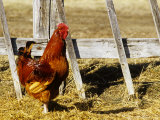
Rhode Island Red, a breed of chicken, is the Rhode Island State Bird.
The Rhode Island Red is an icon in the farmer's yard, a hardy bird providing both meat and eggs.
• more birds posters
|
|
|
|
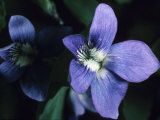
Violet
State flower of Rhode Island, also Illinois, New Jersey, Wisconsin
Violets are native perennial plants with broad, heart-shaped leaves and usually dark blue flowers. Violets are native to the eastern US and Canada and prefer damp woods and meadows; in lawns they are considered weeds. Have you ever had candied violets?
|
|
|
|
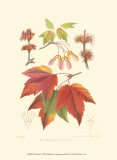
Red Maple
State tree of Rhode Island.
The Red Maple is a common and widespread deciduous tree in eastern North America. Its sap is not as sweet as the Sugar Maple.
• trees posters
|
|
|
|
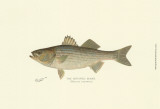
The Rhode Island State Fish is the Striped Bass. It is also the is the state fish of Maryland, South Carolina, and the state saltwater (marine) fish of New York, Virginia, and New Hampshire. The Striped Bass is anadronous, living in both salt and fresh water.
• more aquatic posters
|
|
|
|
Canonicus
b. c. 1565; Rhode Island
d. 6-4-1647
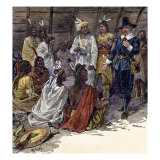
Canonicus was a chief of the Narragansett people of current day Rhode Island when the Pilgrims arrived in the New World. He granted Roger Williams the tract of land which became the nucleus of the colony of Providence Plantation.
• more Native American Cultures posters
|
|
|
|
Giovanni da Verrazano
b. c. 1485; Tuscany
d. c. 1528; on third voyage to New World
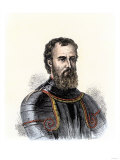
The Italian navigator Giovanni Verrazano made the first verifiable visit to Rhode Island by a European in 1524. Verrazano described an island “in the form of a triangle, distant from the mainland ten leagues, about the bigness of the Island of Rhodes” thus the first part of state's name. The bridge crossing the “narrows”, a tidal strait connecting the upper and lower sections of the New York Bay, is named for Verrazzano.
|
|
|
|
New England Colonies - 1650
Poster Text: During the first half of the 17th century, thousands of English families creossed the Atlantic Ocean to escape the hardships of living in England, They were fleeing religious persecution and strict rule of King James I and, later, his son Charles I. Both believed in the "divine rights of kings" and ruled with absolute power. And both kings threatened anyone who questioned their authority or the power of the English church. Unhappy with their life in England, many families chose to make the dangerous journey across the Arlantic to the New World, where they hoped to find peace and religious freedom. Although life in the rugged New England wilderness was hard, families created strong communities there. Men hunted, cleared the land, built homes, and formed churches. And women, often with the help of their children, grew vegetables, dried fish, and raised animals for food and clothing, By 1650, New England was the richest region in the colonies.
Two groups of English Protestant settled in New England, where they hoped to establish their own churches and live freely according to their religious beliefs. The Pilgrims broke from the Church of England in 1607. They traveled on the Mayflower in search of a safe home for their religious community, landing in Plymouth, Massachusetts, in December of 1620. Because they had separated completely from the English church, the Pilgrims were also called "Separatists." The second group was the Puritans. Unlike the Pilgrims, the Puritans had not split completely from the Church of England. The strong faith of both the Pilgrims and the Puritans helped them survive outbreaks of disease and the harsh New England winters. But life in the Massachusetts Bay Colony was not always peaceful. big arguments, usually about religion, forced some people to move from Massachusetts and set up their own settlements elsewhere. These settlements eventually became the remaining New England colonies of Connecticut, Rhode Island, and New Hampshire.
Native Americans helped the early New England colonists survive. They taught the new settlers many necessary skills, such as how to build animal traps, use fish heads for fertilizer, and construct birch bark canoes. Indians also introduced the settlers to many important foods, including corn, potatoes, tomatoes, pumpkins, and beans, The colonists traded with the Indians, exchanging tools, pots, guns, and horses for animal fur. But conflicts between the Indians an settlers grew as more and more settlers arrived, forcing native tribes to move from their land. These conflicts would explode over the next 250 years.
• more Colonial America posters
|
|
|
|
|
|
|
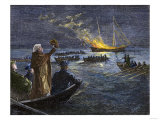
June 9, 1772 - The British ship Gaspee was burned to the waterline and its commander shot in an early incident of rebellion.
|
|
|
|
|
|
|
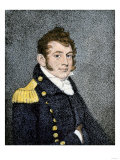
Oliver Hazard Perry
b. 8-3-1785; South Kingston, RI
d. 8-23-1819; on board ship, Port of Spain, Trinidad (yellow fever)
Oliver Hazard Perry entered the Navy as a midshipman in 1799. After distinguished service in the Quasi-War with France and the Barbary Wars, Perry commanded American forces on Lake Erie in the War of 1812. There he won a decisive victory over the British on 10 September 1813 which gave control of the Great Lakes to the United States.
Perry's battle flag read “DONT GIVE UP THE SHIP” [sic], the famous final words of Captain James Lawrence. His battle report after victory is famous: “We have met the enemy and they are ours; two ships, two brigs, one schooner and one sloop”.
• Oliver Hazard Perry and the Battle of Lake Erie
~~~~~~~~~~~~~~~~~~~~~~~~~~
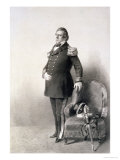
Matthew Calbraith Perry
b. 4-10-1794: Newport, RI
d. 3-4-1858; NYC
Matthew Calbraith Perry became a midshipman in the Navy in 1809. Perry commanded the Gulf Squadron during the latter stages of the Mexican War, and in 1853-54, while commanding the East India Squadron, negotiated the historic treaty which opened Japan to American commerce.
• Commodore Perry in the Land of the Shogun
• US Navy History
|
|
|
|
previous page | top
|
|
I have searched the web for visual, text, and manipulative curriculum support materials - teaching posters, art prints, maps, charts, calendars, books and educational toys featuring famous people, places and events - to help teachers optimize their valuable time and budget.
Browsing the subject areas at NetPosterWorks.com is a learning experience where educators can plan context rich environments while comparing prices, special discounts, framing options and shipping from educational resources.
Thank you for starting your search for inspirational, motivational, and educational posters and learning materials at NetPosterWorks.com. If you need help please contact us.
|
|
|