|
|
New York Posters, Prints, Photographs, Calendars
for educators and home schoolers, themed decor in studio or office.
|
geography > NA > US > NE > NEW YORK CITY, NEW YORK STATE < social studies
|
|
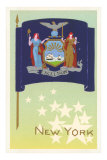
New York, known as the Empire State, joined the Union on July 26, 1788 as the 11th state.
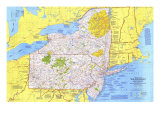
New York, in the Middle Atlantic Division of the Northeast Region, is bordered on the north by Lake Ontario and Canada, Vermont, New Hampshire, and Connecticut to the east, the Atlantic Ocean to the east and southern tip, and New Jersey and Pennsylvania to the west.
|
|
|
|
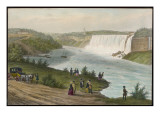
Many first-time visitors heading toward New York State smugly assume they know exatly what's there: New York City and, up the road a piece, Niagara Falls.
...
Only a few miles off the highways smiles a face of New York that often goes unseen. Look for this unspoiled face along the clean beaches of Long Island. See it in the glass-clear waters of Lake George or the fish-filled deeps of the glacier-cut Finger Lakes. Find it in the wine region around Hammondsport or the tradition-rich bastion of West Point. Or atop the forested peaks of the Adirondacks, once grand as the Rockies, now deeply eroded but still boasting the highest skiing peak in the East – 3,780-foot Whiteface Mountain. Wander among the spectacular Thousand Islands, all 1,870 of them – and side-trip to the St. Lawrence Seaway to drive your car under a ship! New York is a feast of such surprises.
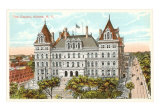
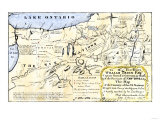
ALBANY: Capitol, Emprie State Plaze towers include offices. BAINBRIDGE: Canoe regatta. CATSKILL MTS.: Forest preserve; year-round resorts. COOPERSTOWN: Baseball Hall of Fame. HAMMONDSPORT: Winery tours. HUNTER: German Alps Festival. LAKE PLACID: 1980 Olympics. NEW YORK: everything. NIAGARA FALLS: natural wonder. PALMYRA: Joseph Smith Home. PENN YAN: Finger Lakes. RHINEBECK: Old plane museum ROME: reconstructed Fort Stanwyx; restored section of Erie Canal. SARANAC LAKE: Winter Carnival. SARATOGA: Thoroughbred racing. UTICA: Brewery. WATKINS GLEN: Scenic Gorge; Formula 1 Grand Prix. WEST POINT: Military Academy.
(poster text about New York)
|
|
|
|
|
|
|
|
|
|
|
|
|
|
|
|
|
|
|
|
|
|
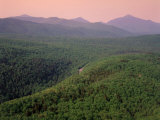
The Adirondacks of New York State are the southern extention of the Laurentain Mountain range of Canada and form the drainage divide between the Hudson River watershed and the St. Lawrence River/Great Lakes watershed.
The Adirondacks are bordered on the east by Lake Champlain and Lake George, which separate them from the Green Mountains in Vermont. Author James Fenimore Cooper set part of his novel The Last of the Mohicans in the Adirondacks.
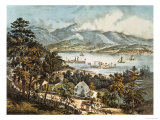
The Catskill Mountains, the highest part of the Allegheny Plateau, is west of the Hudson River. The name was originally spelled “Kaatskil” by the first Dutch settlers. From the same Dutch tradition comes the surname of Knickerbocker, which author Washington Irving used in his 1809 History of New York, and evolved to “knickers” describing a style of pants worn by the Dutch settlers that buckled beneath knees.• more mountain posters
|
|
|
|
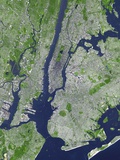
The 315 mile long Hudson River begins in the Adirondack Mountains of northern New York State and flows south through the eastern part of the state before its mouth forms the border between New Jersey and New York and empties into Upper New York Bay.
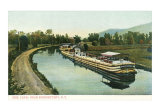
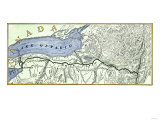
The lower portion of the Hudson is a tidal estuary; the Erie Canal was built from Albany to Buffalo on Lake Erie and opened the eastern seaboard with the Great Lakes.
Now named after explorer Henry Hudson, the Iroquois called the river Muh-he-kun-ne-tuk, the Great Mohegan; it was also know as the Mauritius, “River of Mountains”, and North River.
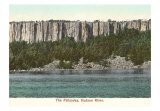
The Palisades are a line of steep cliffs ranging in height between 350-550 ft., on the west side (NJ) of the lower Hudson River, near NYC.
• more river posters
|
|
|
|
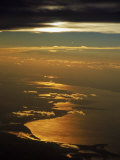
Long Island Sound is a long, narrow, and shallow estuary (a place where fresh and salt water mix) of the Atlantic Ocean, located between Connecticut to the north and Long Island, New York to the south, in the United States.
Long Island Sound is home to more than 1,200 species of invertebrates, 170 species of fish, and dozens of species of migratory birds live at least part of the year. More than 21 million people live within 50 miles of the sound.
• more landforms posters
|
|
|
|
|
|
|
Rose
State flower of New York
Roses are the blooms of flowering shrubs or climbers of the genus Rosa, native to the northern hemisphere temperate regions. Prehistoric remains of wild roses have been found and they were cultivated in Asia as long as 5,000 years ago.
|
|
|
|
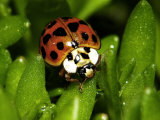
Lady Bug
New York State Insect
Ladybugs, or lady beetles, are small insects that are usually red, orange, or yellow with black spots on their back. Most ladybugs consume other insects that damage crops.
|
|
|
|
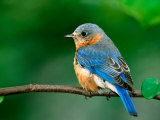
Eastern Bluebird
New York State Bird
The Eastern Bluebird, a member of the thrush family, is found in areas east of the Rockie Mountains from Canada to the Gulf States. The bluebird inhabit open woodlands, farm land and orchards where they eat insects.
• more bird posters
|
|
|
|
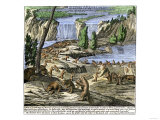
Beaver
New York State Animal
Poster Text: A View of Industry of Beavers ... in order to form a great lake ... According to French Accounts.
• more animals posters
|
|
|
|
Sugar Maple
New York State Tree
The Sugar Maple is one of the most important trees and beautiful trees. Along with the Black Maple, it is the major source of sap for making maple syrup, and its wood is desired in furniture and flooring. While the Sugar Maple is easy to transplant, and fairly fast growing, it doesn't like its roots compacted and is not tolerant of pollution.
• trees posters
• food posters
|
|
|
|
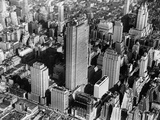
John D. Rockefeller
b. 7-8-1839; Richford, NY
d. 5-23-1937
Rockefeller was the founder of the Standard Oil Company and a philanthropist; he was considered the world's richest man.
• architecture posters
|
|
|
|
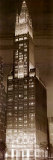
Franklin Winfield Woolworth built the Woolworth Building in 1913 on the profits from his “five and dime” stores where customers could pick out what they wanted without the assistance of a clerk, at a fixed price (no haggling). At the time of construction the Woolworth Building was the tallest in the world.
|
|
|
|
Alfred E. Smith
b. 12-30-1873; Lower Eastside
d. 10-4-1944
Al Smith, whose immigrant grandparents were of Irish, German, Italian, and English, was Governor of New York and Democratic U.S. presidential candidate in 1928, losing to Herbert Hoover. He was the first Catholic to run as a major party candidate in a presidential election.
|
|
|
|
Five large tribes in what is now New York even joined together in a complicated and democratic kind of government called the Iroquois Confederacy. These five original Iroquois tribes were the Seneca, Cayuga, Onondaga, Oneida and Mohawk.
• more Native American posters
|
|
|
|
|
|
|
|
|
previous page | top
|
|
I have searched the web for visual, text, and manipulative curriculum support materials - teaching posters, art prints, maps, charts, calendars, books and educational toys featuring famous people, places and events - to help teachers optimize their valuable time and budget.
Browsing the subject areas at NetPosterWorks.com is a learning experience where educators can plan context rich environments while comparing prices, special discounts, framing options and shipping from educational resources.
Thank you for starting your search for inspirational, motivational, and educational posters and learning materials at NetPosterWorks.com. If you need help please contact us.
|
|
|