|
|
| Flowers by Month Associations - |
|
January Flowers - Carnation and Snowdrop
|
|
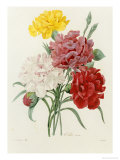
The carnation (Dianthus caryophyllus), a flower associated with the month of January, is native to the Near East and has been cultivated for the last 2,000 years.
The carnation is used to express love, fascination, and distinction and was one of the flowers used in the Greek ceremonial flower garlands to crown the victor (“coronation” or “corone”).
The name may come from the Latin “carnis” (flesh), referring to the original pinkish color of the flower, or ‘incarnacyon’, the incarnation of God made flesh. Remember January is in the time of year in the Northern Hemisphere of Earth when the sun appears to be rising in the sky.
The carnation is the national flower of Spain, the traditional funeral flower in France, and the official flower of Mother's Day based on the Christian legend that where Mary's tears dropped, a carnation sprang up.
|
|
|
|
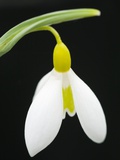
The Snowdrop (Galanthus nivalis), family Amaryllidaceae, is also associated with the month of January.
Snowdrops are among the first bulbs to bloom in Spring.
It has been suggested that the snowdrop is the same plant as the Greek ‘moly’ that appears in Homer's Odyssey. An active substance in snowdrops could have acted as an antidote to Circe's poisons.
|
|
|
|
|
|
February Flowers - Violet and Primrose
|
|
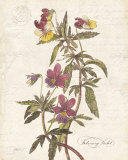
Violets, in the family Violaceae, are associated with the month of February. Violets grow close to the ground with blooms that peak out from under heart shaped leaves. These attributes have lead to its signifying a range of traits- humility, timidity (shrinking violet) faithfulness, fertility and love.
Candied violets make a nice garnish for desserts.
Candied Violets - • choose unbruised violets and be sure to use violets that have not been treated with a pesticide or herbicide • beat an egg white lightly (estimate one egg white/30 violets) • brush egg white on both sides of each violet, then sprinkle each violet with fine granular sugar, heavy on the back, light on the front. (You can make your own fine sugar using regular sugar in a blender.) • lay the violets face up on wax paper until stiff enough to move to a clean piece of wax paper (about one hour)
• let the violets dry in a warm well ventilated room or in a low oven (150 degrees) for several hours. • Store in airtight container in cool, dark place for up to 2 months.
Violets, native to the eastern US and Canada, are the also state flower of Illinois, Rhode Island, New Jersey & Wisconsin.
|
|
|
|
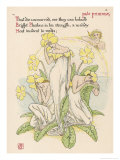
The Primrose (Primula vulgaris), family Primulaceae, a herbaceous perennial plant is the first “rose” (prime-rose) to flower in the Spring, preferring damp conditions shaded from the hot sun.
The primrose is usually light yellow with a bright yellow center, though variation can be found in pink.
|
|
|
|
|
|
March Flower - Narcissus / Daffodil / Jonquil
|
|
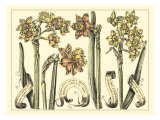
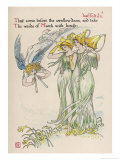
Narcissus, family Amaryllis, is the botanical name for an early Spring blooming bulb with flowers also known as Daffodils and Jonquils. They are associated with the month of March, and signifing respect, regard, and unrequited love.
All Narcissus species are recognizable for their central “trumpet”, a bowl or disc-shaped corona surrounded by a ring of six floral leaves called the perianth.
Traditionally daffodils are yellow to golden-yellow color all over. In the wild, and due to breeding, other colors appear, as do multiple rows and layers of segments.
The name Narcissus is rooted in the Greek words for numbness and stupefy: narke and narkoun. The relationship is recognizable in the words narcotic and narcolepsy. The medicinal qualities of narcissus bulbs have been known for centuries and currently a drug derived from daffodil bulbs is being used in the treatment of Alzheimer's. Florists are familiar what is called “daffodil itch”.
In mythology the name Narcissus is given to the young hunter became so obsessed with his own reflection in a pond that he fell in (asleep?), and drown.
The word daffodil has similar connotations. In Latin affodillus is the name given to the asphodel, a flower of the lily family that grows in the eastern Mediterranean. In mythology it is in the Asphodel Meadows of Hades where the souls of people who “lived lives of near equal good and evil mechanically perform their daily tasks” (as in a trance, asleep?).
And then there are these famous lines from William Wordsworth...
I Wandered lonely as a cloud
That floats on high o'er vales and hills,
When all at once I saw a crowd,
A host, of golden daffodils;
Beside the lake, beneath the trees,
Fluttering and dancing in the breeze....
|
|
|
|
|
|
April Flower - Sweet Pea
|
|
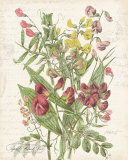
Sweet Pea (Lathyrus odoratus) family Fabaceae (legume), is an annual, climbing, flowering plant native to the eastern Mediterranean region. Associated with the month of April, the sweet pea signifies Good-Bye, Departure, and Blissful Pleasure.
Sweet peas were cross bred and cultivated from a relative insignficant plant in the 17th century, into the plant wildly popular in the Edwardian period for its fresh informality, light pastel colors, and sweet fragrance. The seeds of the sweet pea should not be eaten, they contain a neurotoxin.
The first mention of Sweet Pea in literature seems to be - John Keats ~ I stood tip-toe upon a little hill
Here are sweet peas, on tip-toe for a flight:
With wings of gentle flush o’er delicate white,
And taper fingers catching at all things,
To bind them all about with tiny rings.
• The Sweet Pea Book
|
|
|
|
|
|
May Flowers - Lily of the Valley and Hawthorn
|
|
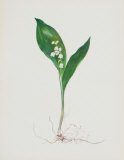
Lily of the Valley (Convallaria majalis) family Ruscaceae is a a herbaceous perennial woodland plant that forms extensive colonies by spreading rhizomes (underground stems). Lily of the Valley is native throughout the cool temperate Northern Hemisphere of Asia, Europe, and North America. Associated with the month of May, the Lily of the Valley signifies “You will find Happiness.”
Christian legend has it that the tears Mary shed at the cross turned to Lilies of the Valley as did the blood of St. George, during his battle with the dragon.
• The Language and Sentiment of Flowers
• Famous Lilys - Lillie Langtry, Lily Pons, Lillian Russell, Lily Tomlin, Tiger Lily character- the princess in Peter Pan, Lily Munster character
|
|
|
|
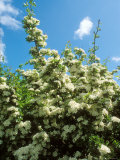
Hawthorn (Crataegus aestivalis) blossoms, also a month of May flower, are from shrubs and trees native to temperate regions of the Northern Hemisphere in Europe, Asia and North America.
The clusters of white Hawthorn blossoms resemble apple blossoms, and appear in April and May. The old adage is “to keep your cold weather clothing out till the Hawthorn blooms.”
Hawthorns, besides providing food and shelter for many birds and mammals, are recommended for water conservation landscapes.
White hawthorn blossoms are the floral emblem of Missouri.
|
|
|
|
|
|
June Flower - Rose
|
|
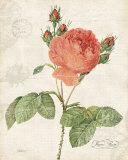
Roses are the blooms of flowering shrubs or climbers of the genus Rosa, native to the northern hemisphere temperate regions. Prehistoric remains of wild roses have been found and they were cultivated in Asia as long as 5,000 years ago.
Associated with the month of June, the rose, valued for its beauty and scent, is symbolic of love and beauty from the ancient Greeks and Romans, (Isis, Aphrodite and Venus) to early Christianity (the Virgin Mary, the wounds of Christ, and Christian martyrs) and modern political movements of socialism and social democracy.
The phrase sub rosa (under the rose) means keeping a secret and refers to the ancient Roman practice of placing a wild rose on the door of a room where confidential matters were discussed.
Blooms of different rose species are the national flowers of England and in the US the state flowers of Iowa, North Dakota, Georgia, and New York.
Even the name “rose” refers to a particular shade of the color red, though now roses can be found in a full range of colors with accompanying symbolism.
Quotes ~
• “Love planted a rose, and the world turned sweet.” ~ Katharine Lee Bates
• “When we desire to confine our words, we commonly say they are spoken under the rose.” ~ Sir Thomas Browne
“O my Luve's like a red, red rose, / That’s newly sprung in June: / O my Luve's like the melodie / That’s sweetly play'd in tune.” ~
Robert Burns
• “Great joy does not gather the rosebuds while it may; its eyes are fixed on the immortal rose which Dante saw.” ~ G. K. Chesterton
• “There is nothing more difficult for a truly creative painter than to paint a rose, because before he can do so he has first to forget all the roses that were ever painted.” ~ Henri Matisse
• “The sharp thorn often produces delicate roses.” ~ Ovid
• “I once had a rose named after me and I was very flattered. But I was not pleased to read the description in the catalogue: no good in a bed, but fine up against a wall.” ~ Eleanor Roosevelt
• “What's in a name? That which we call a rose by any other name would smell as sweet.” ~ William Shakespeare
• “Gather the rose of love whilst yet is time.” ~ Edmund Spenser
• “Rose is a rose is a rose is a rose.” ~ Gertrude Stein
• “The splendor of the rose and the whiteness of the lily do not rob the little violet of it's scent nor the daisy of its simple charm. If every tiny flower wanted to be a rose, spring would lose its loveliness.” ~ Therese of Lisieux
|
|
|
|
|
July Flowers - Delphiniums and Water Lily
|
|
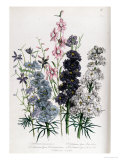
Larkspur is the common name for annual version of Delphinium genus, the flower associated with the month of July. Delphiniums signify lightness, levity, and ardent attachment. Flowering from late spring to late summer, they are best known for their intense blue flowers and are a favorite of gardeners.
The Delphinium received its name from the ancient Greek and Roman physician Diocorides, who described the bud as looking like a dolphin. The larkspur name comes from the spur that emerges from the hollow formed by five petals which grow together.
All parts of the delphinium are very poisonous, and will cause death when eaten in larger amounts.
• Delphiniums
|
|
|
|
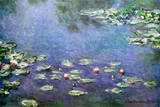
Water Lily (family Nymphaeaceae), another July flower, is associated purity of heart.
Water lilies are also erroneously known as lotus (Hindi), the sacred flower in Buddhism, Hinduism, and Bahá'í faiths, and the national flower of Bangladesh and India, often depicted in Egyptian art.
Water-lilies root in soil in bodies of water, with round leaves and flowers floating on the water surface. There are hundreds of variations.
French Impressionist artist Claude Monet is noted for his series of Water Lily paintings.
|
|
|
|
|
|
August Flowers - Gladiolus
|
|
|
|
|
|
|
September Flowers - Aster and Morning Glory
|
|
Asters (family Asteraceae), associated with the month of September, are popular as garden plants for their colorful star shaped flowers. The name Aster comes from the Greek astron, and Latin astrum, meaning “star”. Asters signify strength of character & splendid beauty.
• The Gardener's Guide to Growing Asters
|
|
|
|
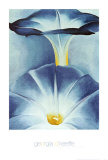
Morning Glory (family Convolvulaceae), also associated with the month of September, open in the morning and die in the afternoon, new flowers bloom each day.
• more Georgia O'Keeffe posters
Bindweed (wild morning glory, creeping jenny, etc.) a native of Eurasia, was introduced to the west as an ornamental; now it is considered a nuisance and pernicious weed that is nearly impossible to eliminate.
|
|
|
|
|
|
October Flowers - Calendula and Cosmos
|
|
Calendula (Calendula officinalis) / marigold, associated with the month of October, are related to daisies in the family Asteraceae.
The name Calendula is related to the Latin = kalendae, for first day of the month, and marigold is a common name which means “turns with the sun”.
Marigold petals are edible, ointments from marigolds are said to be healing of skin irritations, and gardeners plant marigolds near tomatoes to control aphids.
|
|
|
|
Cosmos also associated with the month of October, are in the same family, Asteraceae, as are marigold and asters.
|
|
|
|
|
|
November Flowers - Chrysanthemums
|
|
Chrysanthemums (family Asteraceae), “Queen of the Fall Flowers”, are associated with the month of November and are familiar to many as corsages at football games. They are the most commercially produced flower in the US, the most widely grown pot plant, and one of the longest lasting cut flowers.
Chrysanthemums were first cultivated in ancient China as a flowering herb; various parts of the plant were used as a headache remedy, eaten in salads and brewed into drinks.
Chrysanthemums were adopted by the Japanese Emperor as his emblem - today the Japanese Chrysanthemum Throne is the oldest continuing monarchy in the world.
The word Chrysanthemum is derived from the Greek words “chrysos”, meaning “gold” and “anthemon” meaning “flower”. Chrysantemums symbolize abundance, wealth, cheerfulness, and wonderful friendship, all reminiscent of the fruits of a past growing season.
• Handbook of Healing Chinese Herbs
|
|
|
|
|
|
Holly, Paper Whites and Poinsettia are flowers closely associated with the month of December and Christmas.
|
|
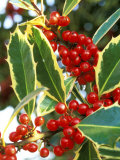
Holly (Ilex aquifolium) was symbolically important in the ancient pagan religions as a sign of the darkest time of the year. Eventually the prickly leaves became associated with Jesus' crown of thorns, while the berries represented the drops of blood, and thus holly transitioned into use in Christmas wreath decorations. The red berries are also an important winter wildlife food.
• Holly for Gardeners
|
|
|
|
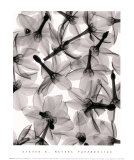
Paper Whites, a very early blooming perennial bulbous plant native to the Mediterranean region, look something like their larger relatives in the Amaryllis family, the narcissus and daffodils.
Paper Whites can be “forced” to bloom at Christmas time by positioning the bulbs, pointed end up, nearly touching one another, in one or two inches of pebbles in a shallow bulb pan and then adding enough pebbles so that only the top third to half of the bulbs remain exposed. Add water (don't let the bulb sit in the water) and put in a cool, dark space till they are 1"-2" tall (add water when necessary), then move to a warmer spot, but not too warm. Start several pots over a couple of weeks to be sure you have a display ready for your party.
• Bulbs in Bloom
|
|
|
|
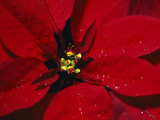
Poinsettia (Euphorbia pulcherrima) is a shrub plant native to parts of Mexico and Guatemala is a member of the Euphorbiaceae family. The ancient Aztecs considered the plant that came to be called poinsettia, to be a symbol of purity. It was used by the Aztecs as a dye and medication.
The actual flowers of the poinsettia are at the tip of the stem, the red “petals” of the poinsettia are really leaves surrounding the flowers that turn red. The plant has been associated with Christmas since it was used by Spanish priests as a decoration to celebrate the birth of Jesus.
The plant was introduced into the US in 1828 by Joel Roberts Poinsett, the first United States Ambassador to Mexico.
• The Ecke Poinsettia Manual (The Ecke Family produces the majority of poinsettia plants.)
|
|
|
|
|
previous page | FLOWERS 1 | 2 | flower lesson | state flowers | gardens
|
|
I have searched the web for visual, text, and manipulative curriculum support materials - teaching posters, art prints, maps, charts, calendars, books and educational toys featuring famous people, places and events - to help teachers optimize their valuable time and budget.
Browsing the subject areas at NetPosterWorks.com is a learning experience where educators can plan context rich environments while comparing prices, special discounts, framing options and shipping from educational resources.
Thank you for starting your search for inspirational, motivational, and educational posters and learning materials at NetPosterWorks.com. If you need help please contact us.
|
|
|