|
|
Gardens for Schools Curriculum Resources
|
|
|
FIRST WE PLANT A GARDEN!
A Spring lesson theme introduced in the fall is really thinking ahead . . . the late summer and early Autumn are exactly the time the start preparing soil for a spring garden that will brighten everyone's day. So get out your shovels and gardening catalogs for big jump on a spring theme.
• School-Based Kitchen Gardens Are Getting an A+: New Study Highlights Benefits of for Both Children and Parents
|
• “In the spring, at the end of the day, you should smell like dirt.” ~ Margaret Atwood
• “One of the most important resources that a garden makes available for use, is the gardener's own body. A garden gives the body the dignity of working in its own support. It is a way of rejoining the human race.” ~ Wendell Berry
• “If you look the right way, you can see that the whole world is a garden.” ~ Frances Hodgson Burnett
• “As long as you have a garden you have a future and as long as you have a future you are alive.” ~ Frances Hodgson Burnett
• “We hear of the conversion of water into wine at the marriage in Cana as of a miracle. But this conversion is, through the goodness of God, made every day before our eyes. Behold the rain which descends from heaven upon our vineyards; there it enters the roots of the vines, to be changed into wine; a constant proof that God loves us, and loves to see us happy.” ~ Benjamin Franklin
• “Sometimes you got to hurt something to help something. Sometimes you have to plow under one thing in order for something else to grow.” ~ Ernest J. Gaines
• “I used to visit and revisit it a dozen times a day, and stand in deep contemplation over my vegetable progeny with a love that nobody could share or conceive of who had never taken part in the process of creation. It was one of the most bewitching sights in the world to observe a hill of beans thrusting aside the soil, or a row of early peas just peeping forth sufficiently to trace a line of delicate green.” ~ Nathaniel Hawthorne, Mosses from an Old Manse
• “There are two spiritual dangers in not owning a farm. One is the danger of supposing that breakfast comes from the grocery, and the other that heat comes from the furnace.” ~ Aldo Leopold
• “Where are these rational practices to be taught and acquired? Not within the four walls of a bare building, in which formality predominates . . . But in the nursery, play-ground, fields, gardens, workshops, manufactures, museums and class-rooms. . . ” ~ Robert Owen
• “Everything is blooming most recklessly; if it were voices instead of colors, there would be an unbelievable shrieking into the heart of the night.” ~ Rainer Maria Rilke
• “If it is true that one of the greatest pleasures of gardening lies in looking forward, then the planning of next year's beds and borders must be one of the most agreeable occupations in the gardener's calendar. This should make October and November particularly pleasant months, for then we may begin to clear our borders, to cut down those sodden and untidy stalks, to dig up and increase our plants, and to move them to other positions where they will show up to greater effect. People who are not gardeners always say that the bare beds of winter are uninteresting; gardeners know better, and take even a certain pleasure in the neatness of the newly dug, bare, brown earth.” ~ Vita Sackville-West
• “Won't you come into the garden? I would like my roses to see you.” ~ Richard Brinsley Sheridan
• “Don't judge each day by the harvest you reap but by the seeds that you plant.” ~ Robert Louis Stevenson
• “I once had a sparrow alight upon my shoulder for a moment, while I was hoeing in a village garden, and I felt that I was more distinguished by that circumstance that I should have been by any epaulet I could have worn.” ~ Henry David Thoreau
• Our Dwindling Food Variety, National Geographic |
|
|
I AM A FARMER, Poster
My hobby is working in the garden, and I like being outdoors - rain or shine. Planting, growing, harvesting: it's all exciting to me! I hope to have a farm of my own someday. If I follow my dream and believe in myself, I'll be supplying fresh, healthy food to the people of the world. I have the power to be somebody!
Related careers: Greenhouse Manager / Agricultural Engineer / Park Ranger / Rancher [• botanists posters]
• more Someday I'll Be Somebody posters
|
|
|
As the daughter of a farmer I know exactly the level of work and resources involved to get a garden of any size established; I also cherish the memory of my elderly father taking his granddaughter to the garden to pick cucumbers and tomatoes for the perfect summer salad (and a few lessons on those squishy green bugs).
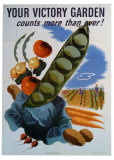
From the World War II era are “Victory Gardens”, the vegetable, fruit and herb gardens planted to both boost food supply and morale in the face of war.
[thought added - families without a yard or other suitable gardening space to supplement their food budget might find the local school grounds as a welcoming place grow vegetables.]
|
|
|
A great organic gardening method is NO TILL - check out the garden calendar demonstrated at the Niles Home for Children in Kansas City.
|
|
|
Here are some ideas and sites related to gardens, planting and seasonal changes.
The first resource I always look to are parents, families, and your community. Check locally for a community garden, a garden club, or gardening business that would appreciate an opportunity to become involved in schools.
State universities and state extension services are also valuable resources. See the USDA Cooperative State Research, Education and Extension Service site as a starting point on the web.
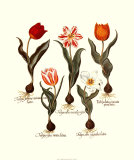
I'd like to suggest a program called ‘Journey North’ as inspiration for pulling together art, science, and social studies in an integrated learning experience while networking schools together through the internet. The program is “a global study of wildlife migration and seasonal change” that can be adapted for grade levels, resources, and local habitat. One of the tools of “Journey North” is to plant tulips in the fall and record the bloom dates at locations across the nation to gain an understanding of the role of lengthening daylight hours for plants.
kidsgardening.org, a part of the National Gardening Association, as a parents and teachers sections for guidance in working with preschoolers.
AllSpecies.org - lots of community and enviromental education information including composting, and a project called EcoKids.
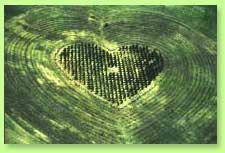
The Heart Forest - how this is a bit bigger than most gardens - it's a 22 acre site near the Kansas City International Airport. Consider a smaller scale “land art” - a school mascot or initials in herbs for instance. Check out land artist Stan Herd of Lawrence, Kansas, who helped us out with planning the Heart Forest.
While looking at the land art that is best seen from the air, think about other art that was only recognized when humanity took to the air - the Nazca Lines are geoglyphs in the Nazca Desert of Peru. And wouldn't you know it! - southeastern Peru is likely the “birthplace” of the potato!
Following this line of thought could be an introduction into Greek mythology and the story of Demeter and Persephone.
FYI - did you know that the Aztecs built “floating gardens” by piling soil on woven mats that were anchored to the bed of shallow Lake Texcoco, the site of today's Mexico City?
|
|
|
|
|
|