|
|
|
Ralph Ellison
b. 3-3-1914; Oklahoma City, OK
d. 4-16-1994
Ellison only published three books during his life. Yet he is one of the greatest writers of the 20th century, and some say his novel Invisible Man is the most important American work written after World War II.
Ralph was born in Oklahoma City. His family was poor, but his parents encouraged him, and he saw himself as a “Renaissance man” who could accomplish anything. Ralph's father died when Ralph was young. His mother worked as a maid for white families and brought home old books, magazines, and records. Mr. Ellison said that these things “spoke to me of a life which was broader and more interesting – and of a word which I could some day make my own.”
• more Ralph Ellison posters
• “I am an invisible man. No, I am not a spook like those who haunted Edgar Allan Poe. ... I am a man of substance, of flesh and bone, fiber and liquids – and I might even be said to possess a mind. I am invisible, understand, simply because people refuse to see me.” Invisible Man
|
|
|
|
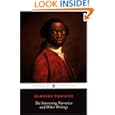
Olaudah Equiano
aka Gustavus Vassa
b. c. 1745; near the Niger River
d. 3-31-1797; London
Olaudah Equiano's autobiography depicts his “kidnapping in Africa at the age of ten, his service as the slave of an officer in the British Navy, his ten years of labor on slave ships until he was able to purchase his freedom in 1766, and his life afterward as a leading and respected figure in the antislavery movement in England”, helping to influence British abolition of the slave trade through the Slave Trade Act of 1807.
|
|
|
|
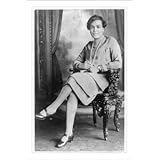
Jessie Redmon Fauset
b. 4-27-1882; New Jersey
d. 4-39-1961; Philadelphia (heart failure)
Jessie Redmon Fauset, a poet, novelist, essayist, is most noted as the literary editor of The Crisis (NAACP magazine) under W. E. B. Du Bois, a role for which Langston Hughes called her the “midwife of the Harlem Renaissance”.
Fauset, who earned a degree from Cornell, the University of Pennsylvania and the Sorbonne, was also a teacher for many years.
Jessie Redmon Fauset quote ~
• “The Complex of color ... every colored man feels it sooner or later. It gets in the way of his dreams, of his education, of his marriage, of the rearing of his children.” - There is Confusion
|
|
|
|
Ernest J. Gaines
b. 1-15-1933; Pointe Coupee Parish, LA
Ernest Gaines, the son of sharecroppers, was awarded the National Book Critics Circle Award for fiction for his 1993 novel, A Lesson Before Dying.
Gaines, who teaches creative writing, has also been a MacArthur Foundation fellow, awarded the National Humanities Medal, and inducted into the French Ordre des Arts et des Lettres (Order of Arts and Letters) as a Chevalier.
Ernest Gaines quotes ~
• “I have no more to say except this: We must live with our own conscience.”
• “Nietzsche said without music, life would be a mistake. To me, without books, life would be a mistake.”
• “I tried to decide just how I should respond to them. Whether I should act like the teacher that I was, or like the nigger that I was supposed to be.”
• “Sometimes you got to hurt something to help something. Sometimes you have to plow under one thing in order for something else to grow.”
• “Anytime a child is born, the old people look in his face and ask him if he's the One.”
• “Why is it that, as a culture, we are more comfortable seeing two men holding guns than holding hands?”
• “I hope when I die, they won't put on my tombstone, ‘He wrote Miss Jane Pittman.’ Put anything else, but don't put just that.”
• “Everything's been said, but it needs saying again.”
|
|
|
|
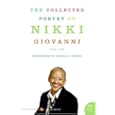
“Nikki” Giovanni
née Yolande Cornelia
b. 6-7-1943; Knoxville, TN
Poet and activist Nikki Giovanni has taught English at Virginia Tech since 1987. In 2004 Giovanni was nominated for the Grammy Award for Best Spoken Word Album.
Nikki Giovanni quotes ~
• “We love because it's the only true adventure.”
• “There is always something to do. There are hungry people to feed, naked people to clothe, sick people to comfort and make well. And while I don't expect you to save the world I do think it's not asking too much for you to love those with whom you sleep, share the happiness of those whom you call friend, engage those among you who are visionary and remove from your life those who offer you depression, despair and disrespect.”
• “Mistakes are a fact of life: It is the response to the error that counts.”
• “I am so hip even my errors are correct.”
• “Nothing is easy to the unwilling.”
• “A lot of people refuse to do things because they don't want to go naked, don't want to go without guarantee. But that's what's got to happen. You go naked until you die.”
• “I'm glad I understand that while language is a gift, listening is a responsibility.”
• “I really don't think life is about the I-could-have-beens. Life is only about the I-tried-to-do. I don't mind the failure but I can't imagine that I'd forgive myself if I didn't try.”
• “If you're a writer, the answer to everything is yes.”
• “If I can't do what I want to do, then my job is to not do what I want to do. It's not the same thing, but it's the best thing I can do.”
• “If you don't understand yourself you don't understand anybody else.”
• “Deal with yourself as a individual, worthy of respect and make everyone else deal with you the same way.”
• “We write because we believe the human spirit cannot be tamed and should not be trained.”
• “It's not a ladder we're climbing, it's literature we're producing. . . . We cannot possibly leave it to history as a discipline nor to sociology nor science nor economics to tell the story of our people.”
|
|
|
|
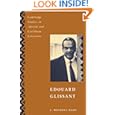
Édouard Glissant
b. 9-21-1928; Martinique
d. 2-3-2011; Paris, France
Édouard Glissant, a French writer, poet and literary critic, is widely recognised as being one of the most influential figures in Caribbean thought and cultural commentary.
Glissant had been visiting professor of French Literature at CUNY since 1995, and the president of France's cultural centre devoted to the history of slave trade since 2006.
Édouard Glissant quote ~
•“The author must be demythifies, certaily, because he must be integrated into a common resolve. The collective ‘we’ becomes the site of the generative system, and the true subject.”
|
|
previous page | top | next
black history > Black Writers Index > a-c | d | E-F-G | h-i | j-n | o-t | w-x
|
|
I have searched the web for visual, text, and manipulative curriculum support materials - teaching posters, art prints, maps, charts, calendars, books and educational toys featuring famous people, places and events - to help teachers optimize their valuable time and budget.
Browsing the subject areas at NetPosterWorks.com is a learning experience where educators can plan context rich environments while comparing prices, special discounts, framing options and shipping from educational resources.
Thank you for starting your search for inspirational, motivational, and educational posters and learning materials at NetPosterWorks.com. If you need help please contact us.
|
|
|