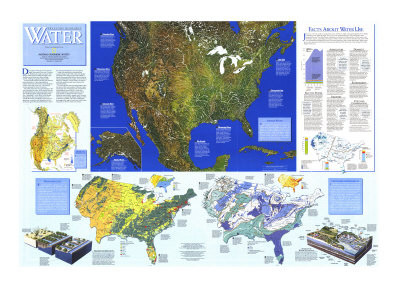
Do you know where your water was last night? Last year? Or where it's headed as it swishes across the slick surface of the sink and vanishes through a pipe? And what you've done to it while washing clothes, watering the garden, taking a bath? ... more text ...
(1993 information - assign your students to update information.)
• “Water is fundamental for life and health. The human right to water is indispensable for leading a healthy life in human dignity. It is a pre-requisite to the realization of all other human rights.” The United Nations Committee on Economic, Cultural and Social Rights, Nov 27, 2002
• “How could drops of water know themselves to be a river? Yet the river flows on.” ~ Antoine de Saint-Exupery
• “We hear of the conversion of water into wine at the marriage in Cana as of a miracle. But this conversion is, through the goodness of God, made every day before our eyes. Behold the rain which descends from heaven upon our vineyards; there it enters the roots of the vines, to be changed into wine; a constant proof that God loves us, and loves to see us happy.” ~ Benjamin Franklin
• “Water is the only drink for a wise man.” ~ Henry David Thoreau
• “When Kansas and Colorado have a quarrel over the water in the Arkansas River they don’t call out the National Guard in each state and go to war over it. They bring a suit in the Supreme Court of the United States and abide by the decision. There isn’t a reason in the world why we cannot do that internationally.” ~ Harry S Truman
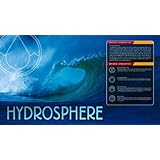
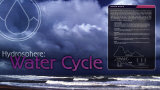
Poster Text: The Hydrosphere encompasses all forms of water found within the Earth's sphe
75% of the Earth is covered
ncluding oceans, lakes, rivers, streams and underground water. Water can be found in the atmosphere as clouds, in the geosphere deep underground and in the biosphere inside ever living organism. Water is the basis for all life on Earth.
Water exists on Earth in all three chemical states, solid (ice), liquid (water) and gas (water vapor). Earth is the only place in our solar system where liquid water has been discovered. This gives Earth its nickname as the “Blue Planet.” The amount of water in the hydrosphere has largely remained unchanged since the beginning of time. It moves from sphere to sphere, it changes forms, taken in by plants and animals, but never really disappears.
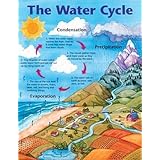
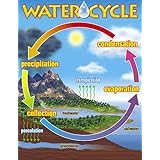
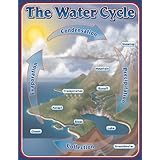
Poster Text: The movement and endless recycling of water throughout the Earth's ecosystem is known as the water cycle, or hydrologic cycle. Water from the Earth's surface is taken up into the atmosphere in vapor form. The water vapor condenses to form clouds and eventually returns to Earth as rain, sleet, hail or snow, depending upon atmospheric conditions. Water is then used by organisms, or flows through rivers to larger bodies of water such as oceans and lakes.
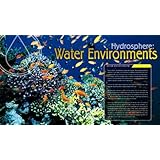
Poster Text: Water is stored in the hydroshpeher in areas called resovoirs. These reservoirs include the atmosphere, oceans, lakes, rivers, soils, glaciers, snowfields, and groundwater. Water is essential for life, and many of these reservoirs provide water environments for living organisms. Wetlands, coral reefs and open oceans are examples of biomes in which water plays a major role. The tropical rainforest biome, which supports the majority of the Earth's biodiversity, dependes on rainfall to sustain its abundant life.
There are many types of watery environments. These range from freshwater ponds to salty seas, whcih contain three times the salt concentration of the ocean.
The largest water environemnt on Earth is the ocean. Oceans cover 71% of the Earth's surface and are responsible for producing about half of the world's biomass (the weight of all plants, animals, fungi, and microbes in the biosphere). Most organisms in the oceans live at the sunlit ocean surface. Below 25 meters there is little light to support photosynthesis for plants, which are the building blocks for the rest of the food chain.
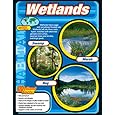
Wetland habitats support an immense diveristy of life, from tiny microscopic organisms to reptiles, to large mammals. By definition, wetlands are lands on which water covers the soil or is present either at or near the surface of the soil. In coastal wetlands and estuaries, the salt water and tides combine to create an environment in which only salt-tolerant species (halophytes) can survive. Inland wetlands include food plants along rivers and streams. Marshes and wet meadows are dominated by grasses and other non-woody plants or shrubs, while swamps are dominated by trees.
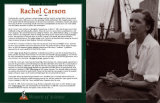
Rachel Carson b. 5-27-1907; Springdale, PA d. 4-14-1964; MD
Rachael Carson wanted to be a writer, but a college course in biology inspired her to think about a career in science.
Carson was able to combine her two loves of science and writing, raising the warning flag about the danders of pesticides that she observed were killing fish, birds, and insects. Her first two books, “Under the Sea-Wind” and “The Sea Around Us,” describe the oceans and the life they contain, but it was “Silent Spring,” published in 1962, that made her famous.
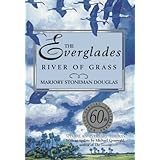
Journalist, feminist, and environmentalist Marjory Stoneman Douglas is best remembered for her staunch defense of the Everglades against efforts to drain it and claim land for development.
John Wesley Powell is best remembered for his 1869 three-month river trip down the Green and Colorado rivers, the first passage of European Americans through the Grand Canyon.
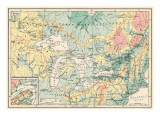
Powell was also the second director of the US Geological Survey (1881–1894) and proposed policies for water management in the development of the arid West, such as state boundaries based on watershed areas (to avoid squabbles).
Ed Ricketts b. 5-14-1897; Chicago, IL
d. 5-11-1948; California (car-train accident)
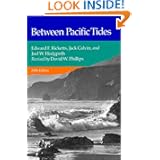
Marine biologist, ecologist, and philosopher Ed Ricketts is best known for Between Pacific Tides (1939), a pioneering study of intertidal ecology, and for his influence on writer John Steinbeck, which resulted in their collaboration on the Sea of Cortez, later republished as The Log from the Sea of Cortez (1951).
FYI - Steinbeck fictionalized Ricketts' lab in Cannery Row; Ricketts was also friends with Joseph Campbell.
I have searched the web for visual, text, and manipulative curriculum support materials - teaching posters, art prints, maps, charts, calendars, books and educational toys featuring famous people, places and events - to help teachers optimize their valuable time and budget.
Browsing the subject areas at NetPosterWorks.com is a learning experience where educators can plan context rich environments while comparing prices, special discounts, framing options and shipping from educational resources.
Thank you for starting your search for inspirational, motivational, and educational posters and learning materials at NetPosterWorks.com. If you need help please contact us.