|
|
|
Thomas Babington, 1st Baron Macaulay
b. 10-25-1800; Leicestershire, England
d. 12-28-1859; London
Thomas Babington Macaulay, a poet, historian and Whig politician, wrote extensively as an essayist and reviewer on British history. Historian George Macaulay Trevelyan was his great-nephew.
Thomas Macaulay quotes ~
• “The measure of a man's real character is what he would do if he knew he would never be found out.”
• “I shall cheerfully bear the reproach of having descended below the dignity of history if I can succeed in placing before the English of the nineteenth century a true picture of the life of their ancestors.”
• “I would rather be poor in a cottage full of books than a king without the desire to read.”
• “Many politicians are in the habit of laying it down as a self-evident proposition that no people ought to be free till they are fit to use their freedom. The maxim is worthy of the fool in the old story who resolved not to go into the water till he had learned to swim.”
• “The knowledge of the theory of logic has no tendency whatever to make men good reasoners.”
• “The puritan hated bear baiting, not because it gave pain to the bear, but because it gave pleasure to the spectators.”
• “There is only one cure for the evils which newly acquired freedom produces, and that cure is freedom.”
• “As civilization advances, poetry almost necessarily declines.”
• “Perhaps no person can be a poet, or even enjoy poetry, without a certain unsoundness of mind.”
|
|
|
|
|
|
|
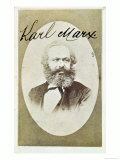
Karl Marx
b. 5-5-1818; Trier, Kingdom of Prussia, (Germany)
d. 3-14-1883; London, England
Karl Marx, a philosopher, political economist, historian, political theorist, sociologist, communist, and revolutionary, is credited with formulating the ideas that are the foundation of modern communism.
Marx summarized his approach in the first line of chapter one of The Communist Manifesto, published in 1848: "The history of all hitherto existing society is the history of class struggles."
Karl Marx quotes ~
• “The history of all hitherto existing society is the history of class struggles.”
• “Art is always and everywhere the secret confession, and at the same time the immortal movement of its time.”
• “Capital is dead labor, which, vampire-like, lives only by sucking living labor, and lives the more, the more labor it sucks.”
• “From each according to his abilities, to each according to his needs.”
• “In bourgeois society capital is independent and has individuality, while the living person is dependent and has no individuality.”
• “Necessity is blind until it becomes conscious. Freedom is the consciousness of necessity.”
• “Social progress can be measured by the social position of the female sex.”
• “Religion is the opium of the masses.”
• Marx : Selected Writings from 'Communist Manifesto', 'Wages, Price and Profit', 'Capital', 'Socialism: Utopian and Scientific
|
|
|
|
David McCullough
b. 7-7-1933; Pittsburgh, PA
Historian and author David McCullough said he “had no anticipation that [he] was going to write history, but [he] stumbled upon a story that [he] thought was powerful, exciting, and very worth telling.” He is also known for his narration of many television programs.
• John Adams by David McCullough
|
|
|
|
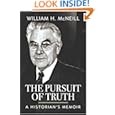
William Hardy McNeill
b. 10-31-1917; Vancouver, BC, Canada
Over the course of his career as a historian, teacher, and mentor, McNeill expounded the range of history and integrated it into an evolutionary worldview uniting physical, biological, and intellectual processes. Accordingly, The Pursuit of Truth explores the personal and professional life of a man who affected the way a core academic discipline has been taught and understood in America. (book description)
|
|
|
|
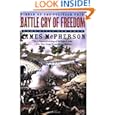
James M. McPherson
b. 10-11-1936; Valley City, North Dakota
Historian and professor James M. McPherson focuses on the American Civil War historian, receiving the Pulitzer Prize for Battle Cry of Freedom.
He is known for lobbying on behalf of the preservation of Civil War battlefields such as working to prevent the construction of a commercial theme park at the Manassas battlefield.
|
|
|
|
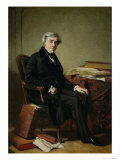
Jules Michelet
b. 8-21-1798; Paris, France
d. 2-9-1874; Hyères
Jules Michelet is best remembered for his insistence that history should concentrate on “the people, and not only its leaders or its institutions”, and one of the first historians to apply these liberal principles to historical scholarship. His chief work is the monumental Histoire de France, that would take 30 years to complete.
|
|
|
|
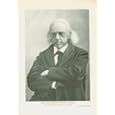
Theodor Mommsen
b. 11-30-1817; Schleswig (Germany)
d. 11-1-1903; Charlottenburg, German Empire
Theodor Mommsen was a classical scholar, historian, jurist, journalist, politician, archaeologist, and writer whose work regarding Roman history is still of fundamental importance for contemporary research.
Mommsen received the Nobel Prize in Literature in 1902 “the greatest living master of the art of historical writing, with special reference to his monumental work, A History of Rome.”
|
|
|
|
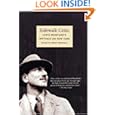
Lewis Mumford
b. 10-19-1895; Flushing, Queens, NY
d. 1-26-1990; Amenia, NY
Historian and philosopher of technology and science, Lewis Mumford believed that “what defined humanity, what set human beings apart from other animals, was not primarily our use of tools (technology) but our use of language (symbols).”
Lewis Mumford quotes ~
• “The artist does not illustrate science (but) he frequently responds to the same interests that a scientist does.”
• “One of the functions of intelligence is to take account of the dangers that come from trusting solely to the intelligence.”
• “Every generation revolts against its fathers and makes friends with its grandfathers.”
• “The chief function of the city is to convert power into form, energy into culture, dead matter into the living symbols of art, biological reproduction into social creativity.”
• “The city is a fact in nature, like a cave, a run of mackerel or an ant-heap. But it is also a conscious work of art, and it holds within its communal framework many simpler and more personal forms of art. Mind takes form in the city; and in turn, urban forms condition mind.”
• “New York is the perfect model of a city, not the model of a perfect city.”
• “Forget the damned motor car and build the cities for lovers and friends.”
• “Our national flower is the concrete cloverleaf.”
• “Restore human legs as a means of travel. Pedestrians rely on food for fuel and need no special parking facilities.”
• “A day spent without the sight or sound of beauty, the contemplation of mystery, or the search of truth or perfection is a poverty-stricken day; and a succession of such days is fatal to human life.”
• “The Earth is the Lord's fullness thereof: this is no longer a hollow dictum of religion, but a directive for economic action toward human brotherhood.”
• “War is the supreme drama of a completely mechanized society.”
• “A man of courage never needs weapons, but he may need bail.”
• “By his very success in inventing labor-saving devices, modern man has manufactured an abyss of boredom that only the privileged classes in earlier civilizations have ever fathomed.”
• Technics and Civilization
• The Highway and the City
|
|
|
|
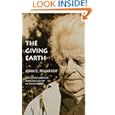
John G. Neihardt
b. 1-8-1881; Sharpsburg, IL
d. 11-24-1973; Columbia, MO
Author and poet John Gneisenau Neihardt was also an amateur historian and ethnographer who preserved memories of the Native Americans and the pioneer past. He was the Nebraska State Poet Laureate from 1921 until his death and also a professor at the University of Nebraska and the University of Missouri.
John Neihardt quotes ~
• “The only cowards are sinners; fighting the fight is all.”
• “Everything the Power of the World does is in a circle. The Sky is round and I have heard that the earth is round like a ball and so are all the stars. The Wind, in its greatest power, whirls. Birds make their nests in circles. ... The sun comes forth and goes down again in a circle. The moon does the same, and both are round. Even the seasons form a great circle in their changing, and always come back again to where they were.” - Black Elk Speaks
|
|
|