|
|
|
|
|
|
|
Salvador Dali
b. 5-11-1904; Figueres, Spain
d. 1-23-1989; Figueres
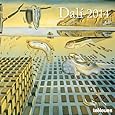
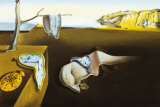
Symbolism abounds in the eerie, melting images of pioneering Surrealist artist Salvador Dali’s most famous work, “The Persistence of Memory.” Creating “hand-painted dream photographs,” Dali portrayed fantastic visions made believable through expert rendering. Captivated by scientific breakthroughs Dali, though always evasive on theories of the painting’s meaning, may have been illustrating Einstein’s theory that time is relative, and not fixed.
• more Salvador Dali posters
|
|
|
|
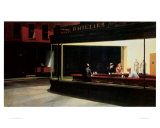
Edward Hopper
b. 7-22-1882; Nyack, NY
d. 5-15-1967; New York City
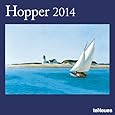
Edward Hopper was one of the greatest of the American realist painters. ...
Edward Hopper quotes ~
• “So much of every art is an expression of the subconscious that it seems to me most of all the important qualities are put there unconsciously, and little of importance by the conscious intellect. But these are things for the psychologist to untangle.”
• “The only quality that endures in art is a personal vision of the world. Methods are transient: personality is enduring.”
• “Great art is the outward expression of an inner life in the artist, and this inner life will result in his personal vision of the world… …The inner life of a human being is a vast and varied realm.”
• Massachusetts posters
|
|
|
|
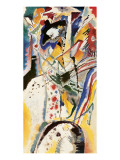
Wassily Kandinsky -
b. 12-4-1866; Moscow, Russia
d. 12-13-1944; Neuilly-sur-Seine, France
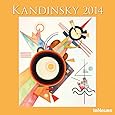
Wassily Kandinsky, the father of abstract art, was also a skilled musician who saw color when he listened to music, and believed color could visually express music’s timber, pitch and volume. Trained in the legal profession, Kandinsky began his art studies at age 30 after seeing Monet’s “Haystacks”. Passionately compelled to create, Kandinsky believed that the purity of this desire would communicate itself to viewers of his work.
• Expressionism posters
• Concerning the Spiritual in Art by Wassily Kandinsky
|
|
|
|
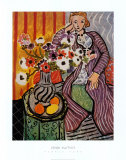
Henri Matisse -
b. 12-31-1869; Le Cateau-Cambrésis, Nord, France
d. 11-3-1954; Nice
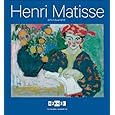
Painter Henri Matisse expressed joy through patterns, ornamentation and vivid colors. Given a paint set while recovering from an illness, Matisse described his discovery of art as “a kind of paradise.” Originally labeled a Fauvist, he produced early works that were remarkably mature. After seeing Impressionist and Japanese art, Matisse made color instrumental to his work, and experimented with expressive abstraction. He also decorated the Dominican nuns’ chapel at Vence, France when he was almost 80. Matisse, who was often nervous, relieved his tension through painting.
• more Henri Matisse posters
|
|
|
|
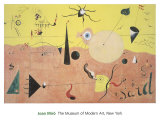
Joan Miro
b. 4-20-1893; Barcelona, Spain
d. 12-25-1983; Palma, Majorca, Spain
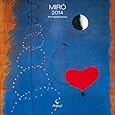
Surrealist Joan Miro paints with childlike exuberance in joyful rebellion against conventional painting methods. Influenced by the 1920’s Paris counterculture, his art is filled with wonderful absurdity. He often uses primary and secondary colors as well as organic shapes to convey a lively, energetic zest for life – beyond mere child’s play.
|
|
|
|
Georgia O'Keeffe
b. 11-15-1887; Sun Prairie, Wisconsin
d. 3-6-1986; Santa Fe, New Mexico
Poster Text: About the Artist
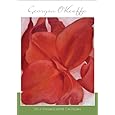
Georgia O'Keeffe is considered to be one of the greatest American artists of the century. And she may be the most well-known woman painter in history. During her long career, she worked in many differnt styles. But she is especially best remembered for the beautiful and haunting landscapes she painted of the desert in New Mexico. Georgia O'Keeffe was born a long way from the desert in Sun Prairie, Wisconsin. She decided very early in her life that she wanted to be an artist, and she studied art in Chicago and New York. While she was teaching art in Texas, a friend showed some of her drawings to the photographer Alfred Stieglitz. Stiegletz displayed the works in his New York gallery, and in 1924 he and Georgia O'Keeffe wer married. In 1946 O'Keeffe moved to New Mexico where she painted some of her most memorable works – landscapes featuring animal bones, dry mountains, and delicate flowers. Often she painted extreme close up views of thes objects turning them into lovely abstractiosnl Georgia O'Keeffe was fiercely independent and she lived alone in the desert until her death at the age of 98.
About the Painting
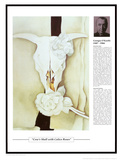
“Cow's Skull with Calico Roses” was painted in 1931, when Georgia O'Keeffe was at the peak of her creative powers. O'Keefe had spent the summer of 1929 at a small ranch house in the desert near Taos. New Mexico. At the end of the summer, she shipped a barrel of old animal bones back to her studio in New York. With the scenery of the desert still fresh in her mind, she set to work on a series of paintings featuring bones, sky, and barren ground. Among these was the lonely painting “Cow's Skull with Calico Roses”. For Georgia O'Keeffe, bones were an symbol of the desert. And the calico roses, which people of the Southwest used to decorate graves, were a symbol of death. The whole mood of the painting, with its pale colors broken only by a black gash down the center, suggest sadness or grief. But the painting also shows the two “sides” of the desert O'Keeffe loved so deeply – harshness, represented by the sun-bleached skull, and fragile beauty, ... by the delicate white roses.
• more Georgia O’Keeffe posters
|
|
|
|
|
|
|
John Sloan
b. 8-2-1871; Lock Haven, Pennsylvania
d. 9-8-1951; Hanover, NH
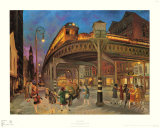
John Sloan was a leading figure in the Ashcan School of realist artists and a member of The Eight (Robert Henri, Everett Shinn, Arthur B. Davies, Ernest Lawson, Maurice Prendergast, George Luks, and William Glackens).
• New York posters
|
|
|
previous page | top
|
|
I have searched the web for visual, text, and manipulative curriculum support materials - teaching posters, art prints, maps, charts, calendars, books and educational toys featuring famous people, places and events - to help teachers optimize their valuable time and budget.
Browsing the subject areas at NetPosterWorks.com is a learning experience where educators can plan context rich environments while comparing prices, special discounts, framing options and shipping from educational resources.
Thank you for starting your search for inspirational, motivational, and educational posters and learning materials at NetPosterWorks.com. If you need help please contact us.
|
|
|