





James Baldwin Posters, Books, Videos, Links for Learning
|
||||||||||||||||||||||||||
|
literature > authors list > JAMES BALDWIN < famous men < black history < social studies |
||||||||||||||||||||||||||
|
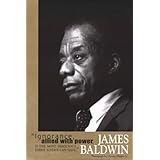
James Baldwin James Baldwin, African American author, playwright, poet and civil rights activist, used his art form to explore and deal with the racial and sexual identification issues in 20th century United States. ~~~~~~ • “Freedom is not something that anybody can be given. Freedom is something people take, and people are as free as they want to be.”
|
||||||||||||||||||||||||||
BOOKS, VIDEO, AUDIO Go Tell It On the Mountain by James Baldwin - “Mountain,” Baldwin said, “is the book I had to write if I was ever going to write anything else.” Go Tell It On The Mountain, first published in 1953, is Baldwin’s first major work, a semiautobiographical novel that has established itself as an American classic. With lyrical precision, psychological directness, resonating symbolic power, and a rage that is at once unrelenting and compassionate, Baldwin chronicles a fourteen-year-old boy’s discovery of the terms of his identity as the stepson of the minister of a storefront Pentecostal church in Harlem one Saturday in March of 1935. Baldwin’s rendering of his protagonist’s spiritual, sexual, and moral struggle of self-invention opened new possibilities in the American language and in the way Americans understand themselves. [book description] Notes of a Native Son by James Baldwin - Since its original publication in 1955, this first nonfiction collection of essays by James Baldwin remains an American classic. His impassioned essays of life in Harlem, the protest novel, movies, and African-Americans abroad are as powerful today as when they were first written. Giovanni’s Room by James Baldwin - Set in the 1950s Paris of American expatriates, liaisons, and violence, a young man finds himself caught between desire and conventional morality. With a sharp, probing imagination, James Baldwin’s second novel, a now-classic narrative delves into the mystery of loving and creates a moving, highly controversial story of death and passion that reveals the unspoken complexities of the human heart. Nobody Knows My Name: More Notes of a Native Son by James Baldwin - a collection of illuminating, deeply felt essays on topics ranging from race relations in the United States – including a passionate attack on William Faulkner for his ambivalent views about the segregated South – to the role of the writer in society, with personal accounts of such writers as Richard Wright and Norman Mailer. The Fire Next Time by James Baldwin - A national bestseller when it first appeared in 1963, The Fire Next Time galvanized the nation and gave passionate voice to the emerging civil rights movement. At once a powerful evocation of James Baldwin’s early life in Harlem and a disturbing examination of the consequences of racial injustice, the book is an intensely personal and provocative document. It consists of two “letters,” written on the occasion of the centennial of the Emancipation Proclamation, that exhort Americans, both black and white, to attack the terrible legacy of racism. Described by The New York Times Book Review as “sermon, ultimatum, confession, deposition, testament, and chronicle...all presented in searing, brilliant prose,” The Fire Next Time stands as a classic of our literature. [book description] Another Country by James Baldwin - Set in Greenwich Village, Harlem, and France, among other locales, Another Country is a novel of passions – sexual, racial, political, artistic – that is stunning for its emotional intensity and haunting sensuality, depicting men and women, blacks and whites, stripped of their masks of gender and race by love and hatred at the most elemental and sublime. Going to Meet the Man by James Baldwin - “There’s no way not to suffer. But you try all kinds of ways to keep from drowning in it.” The men and women in these eight short fictions grasp this truth on an elemental level, and their stories, as told by James Baldwin, detail the ingenious and often desperate ways in which they try to keep their head above water. It may be the heroin that a down-and-out jazz pianist uses to face the terror of pouring his life into an inanimate instrument. It may be the brittle piety of a father who can never forgive his son for his illegitimacy. Or it may be the screen of bigotry that a redneck deputy has raised to blunt the awful childhood memory of the day his parents took him to watch a black man being murdered by a gleeful mob. Africans in America: America’s Journey Through Slavery (1998 VHS) - groundbreaking six hour series of surprising revelations, dramatic recreations, rare archival photography and riveting first-person accounts. Africans in America helps define the reality of slavery’s past through the insightful commentary of a wide range of voices, including General Colin Powell and leading scholars, and offers unparalleled understanding - from slavery’s birth in the early 1600s through the violent onset of civil war in 1860. Narrated by Angela Bassett; includes the voices of William Hurt and Andre Braugher. Winner 1998 Peabody Award. LINKS FOR LEARNING : James Baldwin |
||||||||||||||||||||||||||


|
|
|
|
|
|
|
|
NPW home | Global PathMarker Collection | APWTW Blog | faqs-about | contact | search | privacy |
|
NetPosterWorks.com ©2007-2015 The Creative Process, LLC All Rights Reserved. |
last updated