|
|
|
|
|
Empedocles
ca. 490-430 BC; Greek colony of Agrigentum, Sicily
Empedocles statement, that four elemental “roots”: fire, air, water, earth, make all the structures in the world, became dogma for two thousand years.
Empedocles also believed in reincarnation: one legend was that he threw himself into Mt. Etna in Sicily to prove to his disciples that once consumed by fire he would come back as a god.
Empedocles quotes ~
• “The nature of God is a circle of which the center is everywhere and the circumference is nowhere.”
• “At one time through love all things come together into one, at another time, through strife's hatred, they are borne each of them apart.”
• “What is lawful is not binding only on some and not binding on others. Lawfulness extends everywhere, through the wide-ruling air and the boundless light of the sky.”
• “Happy is he who has gained the wealth of divine thoughts, wretched is he whose beliefs about the gods are dark.”
• Empedocles: The Extant Fragments
|
|
|
|
Friedrich Engels
b. 11-28-1820; Barmen, Kingdom of Prussia (now Wuppertal, Germany
d. 8-5-1895; London, England
Friedrich Engles was a political philosopher who worke with Karl Marx in authoring The Communist Manifesto , published in 1848. , published in 1848.
Engels came to his revolutionary ideas and rejected the business and industrial values of his parents while studying Hegel and observing the human abuses of child labor and environmental degradation allowed in the name of profit.
Friedrich Engels quotes ~
• “What is Communism? Communism is the doctrine of the conditions of the liberation of the proletariat. What is the proletariat? The proletariat is that class in society which lives entirely from the sale of its labor and does not draw profit from any kind of capital; whose weal and woe, whose life and death, whose sole existence depends on the demand for labor.... ” ~ Principles of Communism (1847)
• “Political economy came into being as a natural result of the expansion of trade, and with its appearance elementary, unscientific huckstering was replaced by a developed system of licensed fraud, an entire science of enrichment.” ~ Outlines of a Critique of Political Economy (1843)
• “How do you think the transition from the present situation to community of Property is to be effected? – The first, fundamental condition for the introduction of community of property is the political liberation of the proletariat through a democratic constitution.” ~ Draft of a Communist Confession of Faith (1847)
• “Terror consists mostly of useless cruelties perpetrated by frightened people in order to reassure themselves.” ~ Letter to Karl Marx (1870)
• “Labour is the source of all wealth, the political economists assert. And it really is the source -- next to nature, which supplies it with the material that it converts into wealth. But it is even infinitely more than this. It is the prime basic condition for all human existence, and this to such an extent that, in a sense, we have to say that labour created man himself.” ~ The Part Played by Labour in the Transition from Ape to Man (1876)
• “Freedom does not consist in any dreamt-of independence from natural laws, but in the knowledge of these laws, and in the possibility this gives of systematically making them work towards definite ends.” ~ Anti-Duhring (1878)
• “Hegel was the first to state correctly the relation between freedom and necessity. To him, freedom is the insight into necessity.” ~ Anti-Duhring (1878)
• “The anarchists put the thing upside down. They declare that the proletarian revolution must begin by doing away with the political organisation of the state. But after its victory the sole organisation which the proletariat finds already in existence is precisely the state. This state may require very considerable alterations before it can fulfil its new functions. But to destroy it at such a moment would be to destroy the only organism by means of which the victorious proletariat can assert its newly-conquered power, hold down its capitalist adversaries and carry out that economic revolution of society without which the whole victory must end in a new defeat and in a mass slaughter of the workers similar to those after the Paris Commune.” ~ Letter to Philip Van Patten (1883)
• “It is no longer a question anywhere of inventing interconnections from out of our brains, but of discovering them in the facts.” ~ Ludwig Feuerbach and the End of Clssical German Philosophy (1886)
• “By bourgeoisie is meant the class of modern capitalists, owners of the means of social production and employers of wage labor. By proletariat, the class of modern wage laborers who, having no means of production of their own, are reduced to selling their labor power in order to live.” ~ The Communist Manifesto, footnote (1888 edition)
• “People think they have taken quite an extraordinarily bold step forward when they have rid themselves of belief in hereditary monarchy and swear by the democratic republic. In reality, however, the state is nothing but a machine for the oppression of one class by another, and indeed in the democratic republic no less than in the monarchy.” ~ Introduction to 1891 edition of Karl Marx's, The Civil War in France
• Empedocles: The Extant Fragments
|
|
|
|
Epictetus
b. ca. 55 AD; Hierapolis, Phrygia (Turkey)
d. ca. 135 AD; Nicopolis, Greece
Epictetus proposes the foundation of all philosophy, which is a way of life and not merely theory, is self-knowledge and awareness of ignorances and weaknesses.
Epictetus, the name given to him by his master Epaphroditos (and simply means “acquired”), was allowed to study philosophy. It is not known how Epictetus was freed but at some point he was teaching in Rome; when all philosphers were banned from Rome in 93 AD, he went to Nicopolis, Greece where he founded a school.
FYI ~ Early Christian scholar and theologian Origen told of how Epictetus' master broke his leg so he couldn't run away, hence Epictetus being depicted with a crutch.
Epictetus quotes ~
• “First learn the meaning of what you say, and then speak.”
• “Don't explain your philosophy. Embody it.”
• “Caretake this moment. Immerse yourself in its particulars. Respond to this person, this challenge, this deed. Quit evasions. Stop giving yourself needless trouble. It is time to really live; to fully inhabit the situation you happen to be in now.”
• “It's not what happens to you, but how you react to it that matters.”
• “All philosophy lies in two words, sustain and abstain.”
• “Wealth consists not in having great possessions, but in having few wants.”
• “Be careful to leave your sons well instructed rather than rich, for the hopes of the instructed are better than the wealth of the ignorant.”
• “All religions must be tolerated ... for every man must get to heaven in his own way.”
• “Freedom is not procured by full enjoyment of what is desired, but by controlling the desire.”
• “Any person capable of angering you becomes your master; he can anger you only when you permit yourself to be disturbed by him.”
• “Difficulties are things that show a person what they are.”
• “If anyone tells you that a certain person speaks ill of you, do not make excuses about what is said of you but answer, ‘He was ignorant of my other faults, else he would not have mentioned these alone.’”
• “You are a little soul carrying around a corpse.”
• “Nature hath given men one tongue but two ears, that we may hear from others twice as much as we speak.”
• Epictetus at Amazon
|
|
|
|
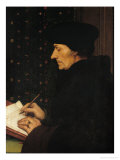
Desiderius Erasmus
b. 10-27-1466; Rotterdam, The Netherlands
d. 7-12-1536; Basel
Desiderius Erasmus was a humanist - a teacher of grammar, rhetoric, moral philosophy, poetry and history as studied via classical authors, and a theologian.
Eramus quotes ~
• “Fortune favors the audacious.”
• “The most disadvantageous peace is better than the most just war.”
• “He who allows oppression shares the crime.”
• “A nail is driven out by another nail. Habit is overcome by habit.”
• “I doubt if a single individual could be found from the whole of mankind free from some form of insanity. The only difference is one of degree. A man who sees a gourd and takes it for his wife is called insane because this happens to very few people.”
• The Erasmus Reader
• Hans Holbein portrait of Erasmus
• Albrecht Dürer posters
|
|
|
|
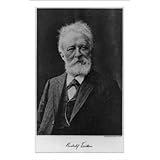
Rudolf Christof Eucken
b. 1-5-1846; Aurich, Kingdom of Hanover, Germany
d. 9-15-1926
Philosopher Rudolf Christof Eucken was awarded the 1908 Nobel Prize in Literature “in recognition of his earnest search for truth, his penetrating power of thought, his wide range of vision, and the warmth and strength in presentation with which in his numerous works he has vindicated and developed an idealistic philosophy of life.”
|
|
|
|
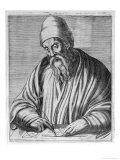
Euclid
ca. 325 BC–265 BC, Alexandria
Euclid of Alexandia, “The Father of Geometry”, was a Greek mathematician who, in his Elements, set forth his principles of geometry proving mathematical theorems from a small set of axioms or accepted principles.
Euclid quotes ~
• “And the whole [is] greater than the part.” ~ Elements, Book 1, Common Notions 5
• “A prime number is one (which is) measured by a unit alone.” ~ Elements, Book 7, Common Notions 11
• “There is no royal road to geometry.” ~ attributed to Euclid
• The Thirteen Books of Euclid's Elements, Books 1 and 2
|
|
|
previous page | top | next
social studies > list notable philosophers > a | b | c | d | E | f | g | h | i-l | m | n-o-p | q-r | s | t-z < science
|
|
I have searched the web for visual, text, and manipulative curriculum support materials - teaching posters, art prints, maps, charts, calendars, books and educational toys featuring famous people, places and events - to help teachers optimize their valuable time and budget.
Browsing the subject areas at NetPosterWorks.com is a learning experience where educators can plan context rich environments while comparing prices, special discounts, framing options and shipping from educational resources.
Thank you for starting your search for inspirational, motivational, and educational posters and learning materials at NetPosterWorks.com. If you need help please contact us.
|
|
|