|
|
|
|
|
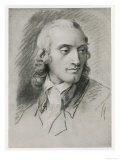
Friedrich Schiller
b. 11-10-1759; Marbach, Germany
d. 5-9-1805; Weimar
Friedrich Schiller, philosopher, poet, historian, & dramatist, inspired Beethoven's “Ode to Joy” with his poem “An die Freude”. Schiller also had a deep friendship with Goethe.
Friedrich Schiller quotes ~
• “A merely fallen enemy may rise again, but the reconciled one is truly vanquished.”
• “Aesthetic matters are fundamental for the harmonious development of both society and the individual.”
• “Art is the daughter of freedom.”
• “Freedom can occur only through education.”
• “Dare to err and to dream. Deep meaning often lies in childish plays.”
• “In the society, where people are just parts in a larger machine, individuals are unable to develop fully.”
• On the Aesthetic Education of Man, Schiller
|
|
|
|
Friedrich Wilhelm Joseph Schelling
b. 1-27-1775; Leonberg, Germany
d. 8-20-1854; Switzerland
Philosopher Friedrich Wilhelm Joseph Schelling was of the German idealism school. He was college roommates with Hegel and a student of Fichte.
Friedrich Wilhelm Joseph Schelling quotes ~
• “All rules for study are summed up in this one: learn only in order to create.”
• “If there is to be any philosophy at all, this contradiction must be resolved – and the solution of this problem, or answer to the question: how can we think both of Presentations as conforming to objects, and objects as conforming to presentations? is, not the first, but the highest task of transcendental philosophy.”
|
|
|
|
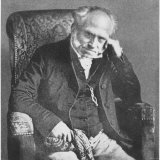
Arthur Schopenhauer
b. 2-22-1788; Danzig (Gdansk), Prussia
d. 9-21-1860; Frankfurt, Germany
Philosopher Arthur Schopenhauer is best remembered for his pessimism and philosophical clarity. His doctoral dissertation, On the Fourfold Root of the Principle of Sufficient Reason, which examined the four separate manifestations of reason in the phenomenal world, was published at age 25.
His most influential work, The World as Will & Representation, asserted that the world is fundamentally what humans recognize in themselves as their “will”. In analyzing “will” he came to the conclusion that humanity's emotional, physical, and sexual desires can never be fulfilled and that a lifestyle of negating desires, similar to the ascetic teachings of Vedanta, Buddhism, and the Church Fathers of early Christianity, was the only way to attain liberation.
Arthur Schopenhauer quotes ~
• “The goal is not so much to see that which no one has seen, but to see that which everyone sees, in a totally different way.”
• “Pride is an established conviction of one’s own paramount worth in some particular respect, while vanity is the desire of rousing such a conviction in others, and it is generally accompanied by the secret hope of ultimately coming to the same conviction oneself. Pride works from within; it is the direct appreciation of oneself. Vanity is the desire to arrive at this appreciation indirectly, from without.”
• “Man can do what he wants but he cannot want what he wants.”
• “Every child is in a way a genius; and every genius is in a way a child.”
• “Compassion is the basis of all morality.”
• “The effect of music is so very much more powerful and penetrating than is that of the other arts, for these others speak only of the shadow, but music of the essence.”
• “There is only one inborn erroneous notion ... that we exist in order to be happy ... So long as we persist in this inborn error ... the world seems to us full of contradictions. For at every step, in great things and small, we are bound to experience that the world and life are certainly not arranged for the purpose of maintaining a happy existence ... hence the countenances of almost all elderly persons wear the expression of ... disappointment.”
• “It is the courage to make a clean breast of it in the face of every question that makes the philosopher.” ~ in a letter to Goethe
• “When the Church says that, in the dogmas of religion, reason is totally incompetent and blind, and its use to be reprehended, this really attests the fact that these dogmas are allegorical in their nature, and are not to be judged by the standard which reason, taking all things sensu proprio, can alone apply. Now the absurdities of a dogma are just the mark and sign of what is allegorical and mythical in it. In the case under consideration, however, the absurdities spring from the fact that two such heterogeneous doctrines as those of the Old and New Testaments had to be combined. The great allegory was of gradual growth. Suggested by external and adventitious circumstances, it was developed by the interpretation put upon them, an interpretation in quiet touch with certain deep-lying truths only half realised. The allegory was finally completed by Augustine, who penetrated deepest into its meaning, and so was able to conceive it as a systematic whole and supply its defects.
~ “The Christian System” in ‘Religion: A Dialogue, and Other Essays’ (1910) as translated by Thomas Bailey Saunders, p. 105
• “National character is only another name for the particular form which the littleness, perversity and baseness of mankind take in every country. Every nation mocks at other nations, and all are right.”
• “Rascals are always sociable — more’s the pity! and the chief sign that a man has any nobility in his character is the little pleasure he takes in others’ company.”
• “I do not believe in freedom of the will. Schopenhauer's words: “Man can do what he wants, but he cannot will what he wills” accompany me in all situations throughout my life and reconcile me with the actions of others even if they are rather painful to me. This awareness of the lack of freedom of will preserves me from taking too seriously myself and my fellow men as acting and deciding individuals and from losing my temper.” ~ Einstein quoting Schopenhauer
|
|
|
|
Seneca
b. c. 4 BC; Cordoba, Hispania (?)
d. 65 AD
Roman Stoic philosopher, statesman, dramatist, and humorist, Seneca the Younger, was tutor and later advisor, to emperor Nero.
Seneca was forced to commit suicide for allegedly conspiring to assassinate Nero (he may have been innocent).
Seneca quotes ~
• “It is not because things are difficult that we do not dare, it is because we do not dare that they are difficult.”
• “A great fortune is a great slavery.”
• “A gem cannot be polished without friction, nor a man perfected without trials.”
• “As long as you live, keep learning how to live.”
• “A sword never kills anybody; it is a tool in the killer's hand.”
• “A person's fears are lighter when the danger is at hand.”
• “A quarrel is quickly settled when deserted by one party; there is no battle unless there be two.”
|
|
|
|
Adam Smith
bap. 6-5-1723; Kirkcaldy, Scotland
d. 7-17-1790; Edinburgh
Social philosopher, the father of modern economics and capitalism, and one of the key figures of the Scottish Enlightenment, Adam Smith is the author of The Theory of Moral Sentiments and An Inquiry into the Nature, and Causes of the Wealth of Nations, usually abbreviated as The Wealth of Nations.
Considered his magnum opus and the first modern work of economics, The Wealth of Nations, earned him an enormous reputation and would become one of the most influential works on economics ever published.
Adam Smith quotes ~
• “Science is the great antidote to the poison of enthusiasm and superstition.”
• “The greatest improvement in the productive powers of labour, and the greatest part of skill, dexterity, and judgment with which it is any where directed, or applied, seem to have been the effects of the division of labour.”
• “As soon as the land of any country has all become private property, the landlords, like all other men, love to reap where they never sowed, and demand a rent even for its natural produce.”
• “No society can surely be flourishing and happy, of which the greater part of the members are poor and miserable. It is but equity, besides, that they who feed, cloath and lodge the whole body of the people, should have such a share of the produce of their own labour as to be themselves tolerably well fed, cloathed and lodged.”
• “But poverty, though it does not prevent the generation, is extremely unfavourable to the rearing of children. The tender plant is produced, but in so cold a soil, and so severe a climate, soon withers and dies.”
• “A man must always live by his work, and his wages must at least be sufficient to maintain him. They must even upon most occasions be somewhat more, otherwise it would be impossible for him to bring up a family, and the race of such workmen could not last beyond the first generation.”
• “Labour was the first price, the original purchase – money that was paid for all things. It was not by gold or by silver, but by labour, that all the wealth of the world was originally purchased; and its value, to those who possess it, and who want to exchange it for some new productions, is precisely equal to the quantity of labour which it can enable them to purchase or command.”
• “People of the same trade seldom meet together, even for merriment and diversion, but the conversation ends in a conspiracy against the public, or in some contrivance to raise prices. It is impossible indeed to prevent such meetings, by any law which either could be executed, or would be consistent with liberty and justice.”
• “But man has almost constant occasion for the help of his brethren, and it is in vain for him to expect it from their benevolence only. He will be more likely to prevail if he can interest their self-love in his favour, and shew them that it is for their own advantage to do for him what he requires of them. Whoever offers to another a bargain of any kind, proposes to do this. Give me that which I want, and you shall have this which you want, is the meaning of every such offer; and it is in this manner that we obtain from one another the far greater part of those good offices which we stand in need of. It is not from the benevolence of the butcher, the brewer, or the baker that we expect our dinner, but from their regard to their own interest. We address ourselves, not to their humanity, but to their self-love, and never talk to them of our own necessities, but of their advantages.”
|
|
|
|
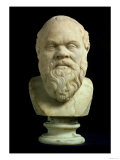
Socrates
b. c. 470 BC; Greece
d. c. 399 BC
Socrates, one of the founders of Western philosophy, is known through the writings of his students Plato and Xenophon. The Socratic method of education is the asking of questions where the responses help open insights into the problem or issue.
Socrates, called a “gadfly" because of his stinging comments, was tried and found guilty of corrupting the minds of the youth of Athens and the impiety of not believing in the gods of the state, was executed by drinking poison hemlock.
Socrates quotes ~
• “As for me, all I know is that I know nothing.”
• “Wisdom begins in wonder.”
• “The only true wisdom is in knowing you know nothing.”
• “Employ your time in improving yourself by other men's writings, so that you shall gain easily what others have labored hard for.”
• “False words are not only evil in themselves, but they infect the soul with evil.”
• “He is richest who is content with the least, for content is the wealth of nature.”
• “The unexamined life is not worth living for a human being.”
• “...if you think that by killing men you can avoid the accuser censoring your lives, you are mistaken; that is not a way of escape which is either possible or honorable; the easiest and the noblest way is not to be crushing others, but to be improving yourselves.”
• “I would rather die having spoken in my manner, than speak in your manner and live.”
• “One who is injured ought not to return the injury, for on no account can it be right to do an injustice; and it is not right to return an injury, or to do evil to any man, however much we have suffered from him.”
• “Worthless people live only to eat and drink; people of worth eat and drink only to live.”
about Socrates~
• “Every human being has, like Socrates, an attendant spirit; and wise are they who obey its signals. If it does not always tell us what to do, it always cautions us what not to do.” ~ Lydia Maria Child
• “Just as Socrates felt that it was necessary to create a tension in the mind so that individuals could rise from the bondage of myths and half-truths to the unfettered realm of creative analysis and objective appraisal, we must we see the need for nonviolent gadflies to create the kind of tension in society that will help men rise from the dark depths of prejudice and racism to the majestic heights of understanding and brotherhood.” ~ Martin Luther King, Jr., Letter from the Birmingham Jail, April 16, 1963
• “Socrates gave no diplomas or degrees, and would have subjected any disciple who demanded one to a disconcerting catechism on the nature of true knowledge.” ~ George Macaulay Trevelyan
|
|
|
|
Solon
b. c. 638 BC; Greece
d. c. 558 BC; Cyprus
Statesman, lawmaker, and poet Solon is best remembered for his efforts to legislate against political, economic and moral decline in archaic Athens. He was not successful though his work laid the foundations of Athenian democracy.
Solon was also a traveler - according to Herodotus he met with Croesus in Sardis.
Solon quotes ~
• “Rule, after you have first learned to submit to rule.”
• “Men keep their agreements when it is an advantage to both parties not to break them; and I shall so frame my laws that it will be evident to the Athenians that it will be for their interest to observe them.”
• “Wealth I desire to have; but wrongfully to get it, I do not wish.
Justice, even if slow, is sure.”
• “For often evil men are rich, and good men poor;
But we will not exchange with them
Our virtue for their wealth since one abides always,
While riches change their owners every day.”
• “No fool can be silent at a feast.”
|
|
|
|
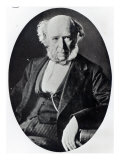
Herbert Spencer
b. 4-27-1820; Derby, England
d. 12-8-1903; Brighton
Philosopher and anthropologist Herbert Spencer was a ‘polymath’, making contributions to a wide range of fields. His best known theory was Social Darwinism , or “the survival of the fittest” in commenting on the work of Charles Darwin. Spencer was also the inventor of the paper clip. , or “the survival of the fittest” in commenting on the work of Charles Darwin. Spencer was also the inventor of the paper clip.
Spencer was nominated for a Nobel Prize in Literature before his death.
Herbert Spencer quotes ~
• “What is Science? To see the absurdity of the prejudice against it, we need only remark that Science is simply a higher development of common knowledge; and that if Science is repudiated, all knowledge must be repudiated along with it.”
• “Time: That which man is always trying to kill, but which ends in killing him.”
• “Man needed one moral constitution to fit him for his original state; he needs another to fit him for his present state; and he has been, is, and will long continue to be, in process of adaptation.”
• “Opinion is ultimately determined by the feelings, and not by the intellect.”
• “No one can be perfectly free till all are free; no one can be perfectly moral till all are moral; no one can be perfectly happy till all are happy.”
• “Architecture, sculpture, painting, music, and poetry, may truly be called the efflorescence of civilised life.”
• “Volumes might be written upon the impiety of the pious.”
• “... But this survival of the fittest, implies multiplication of the fittest.”
• “The ultimate result of shielding men from the effects of folly, is to fill the world with fools.”
• “Every man is free to do that which he wills, provided he infringes not the equal freedom of any other man.”
• “Religion under all its forms is distinguished from everything else in this, that its subject matter passes the sphere of the intellect.”
|
|
|
|
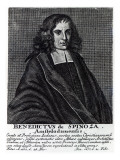
Baruch Spinoza
b. 11-23-1632; Amsterdam (Dutch Republic)
d. 2-21-1677; The Hague
Spinoza laid the philosophical groundwork for the Enlightenment and modern biblical criticism.
Baruch Spinoza quotes ~
• “Peace is not an absence of war, it is a virtue, a state of mind, a disposition for benevolence, confidence, justice.”
• “Schisms do not originate in a love of truth, which is a source of courtesy and gentleness, but rather in an inordinate desire for supremacy. From all these considerations it is clearer than the sun at noonday, that the true schismatics are those who condemn other men's writings, and seditiously stir up the quarrelsome masses against their authors, rather than those authors themselves, who generally write only for the learned, and appeal solely to reason. In fact, the real disturbers of the peace are those who, in a free state, seek to curtail the liberty of judgment which they are unable to tyrannize over.”
• “The ultimate aim of government is not to rule, or restrain, by fear, nor to exact obedience, but contrariwise, to free every man from fear, that he may live in all possible security; in other words, to strengthen his natural right to exist and work without injury to himself or others. No, the object of government is not to change men from rational beings into beasts or puppets, but to enable them to develop their minds and bodies in security, and to employ their reason unshackled; neither showing hatred, anger, or deceit, nor watched with the eyes of jealousy and injustice. In fact, the true aim of government is liberty.”
• “Men's habits of mind differ, so that some more readily embrace one form of faith, some another, for what moves one to pray may move another to scoff, I conclude ... that everyone should be free to choose for himself the foundations of his creed, and that faith should be judged only by its fruits…”
• “In practical life we are compelled to follow what is most probable; in speculative thought we are compelled to follow truth.”
• “In regard to intellect and true virtue, every nation is on a par with the rest, and God has not in these respects chosen one people rather than another.”
• “The ordinary surroundings of life which are esteemed by men (as their actions testify) to be the highest good, may be classed under the three heads — Riches, Fame, and the Pleasures of Sense: with these three the mind is so absorbed that it has little power to reflect on any different good.”
• “Men would never be superstitious, if they could govern all their circumstances by set rules, or if they were always favoured by fortune: but being frequently driven into straits where rules are useless, and being often kept fluctuating pitiably between hope and fear by the uncertainty of fortune's greedily coveted favours, they are consequently, for the most part, very prone to credulity.”
• “I make this chief distinction between religion and superstition, that the latter is founded on ignorance, the former on knowledge ...”
• “If a circle be defined as a figure, such that all straight lines drawn from the center to the circumference are equal, every one can see that such a definition does not in the least explain the essence of a circle, but solely one of its properties.”
• “I do not think it necessary for salvation to know Christ according to the flesh: but with regard to the Eternal Son of God, that is the Eternal Wisdom of God, which has manifested itself in all things and especially in the human mind, and above all in Christ Jesus, the case is far otherwise.”
• “When you say that if I deny, that the operations of seeing, hearing, attending, wishing, &c., can be ascribed to God, or that they exist in Him in any eminent fashion, you do not know what sort of God mine is; I suspect that you believe there is no greater perfection than such as can be explained by the aforesaid attributes. I am not astonished; for I believe that, if a triangle could speak, it would say, in like manner, that God is eminently triangular, while a circle would say that the divine nature is eminently circular. Thus each would ascribe to God its own attributes, would assume itself to be like God, and look on everything else as ill-shaped.”
|
|
|
|
Sun Tzu
b. c. 544 BC (traditional); China
d. c. 496 BC (traditional)
Ancient Chinese philosopher and general Sun Tzu is traditionally believed to have authored The Art of War, a treatise on winning battles. Sun Tzu saw the ideal leader as a Taoist master, a spiritual aspect that adds the dimension of diplomacy, planning and resolving conflicts.
Sun Tzu quotes ~
• “Possessions make you poor, wealth is measurable only in experience.”
• “All war is deception.”
• “If ignorant both of your enemy and yourself, you are certain to be in peril.”
• “In the practical art of war, the best thing of all is to take the enemy's country whole and intact; to shatter and destroy it is not so good.”
• “There has never been a protracted war from which a country has benefited.”
• “You have to believe in yourself.”
|
|
|
|
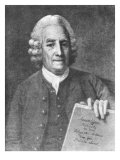
Emanuel Swedenborg
b. 1-29-1688; Stockholm, Sweden
d. 3-28-1772
Swedenborg was a Swedish philosopher, Christian mystic, and theologian who had a prolific career as an inventor and scientist.
Notable people who were influenced by Swedenborg include William Blake, Ralph Waldo Emerson, Carl Gustav Jung, August Stindberg, Charles Baudelaire, Balzac, William Butler Yeats, John “Johnny Appleseed” Chapman, William James, and Helen Keller.
Emanuel Swedenborg quotes ~
• “He who is in evil, is also in the punishment of evil.”
• “Love consists in desiring to give what is our own to another and feeling his delight as our own.”
• “True charity is the desire to be useful to others with no thought of recompense.”
• Collected Works of Emanuel Swedenborg
|
|
|
previous page | top | next
social studies > list notable philosophers > a | b | c | d | e | f | g | h | i-l | m | n-o-p | q-r | S | t-z < science
|
|
I have searched the web for visual, text, and manipulative curriculum support materials - teaching posters, art prints, maps, charts, calendars, books and educational toys featuring famous people, places and events - to help teachers optimize their valuable time and budget.
Browsing the subject areas at NetPosterWorks.com is a learning experience where educators can plan context rich environments while comparing prices, special discounts, framing options and shipping from educational resources.
Thank you for starting your search for inspirational, motivational, and educational posters and learning materials at NetPosterWorks.com. If you need help please contact us.
|
|
|