|
|
|
|
|
|
|
BOOKS ABOUT LABOR AND UNIONS
|
|
|
|
|
|
|
|
|
|
|
|
|
|
|
|
|
|
|
|
|
|
|
|
|
|
|
|
|
|
|
 |
|
|
|
|
|
|
|
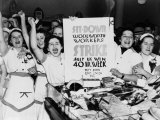
Woolworth Strike
Woolworth's was the first successful ‘five and dime’ store, selling inexpensive necessities and novelties by employing women as ‘unskilled’ clerks. In 1937, 110 women employees of a Woolworth's five and dime store in Detroit called a sit-down strike demanding an increase in the 25¢ an hour wage, an eight-hour workday, overtime pay after forty-eight hours a week, 50¢ lunches for the soda fountain workers; free uniforms along with free laundering (company required uniforms), seniority rights, new employees hired only through the union offices, and no discrimination against the strikers once the strike ended.
The media reported the struggles of the women, the extravagnt life style of the Woolworth heiress “Poor Little Rich Girl” Barbara Hutton, the strike spread, and within a week the strikers won.
• Three Strikes: Miners, Musicians, Salesgirls, and the Fighting Spirit of Labor's Last Century
|
|
|
|
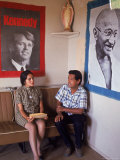
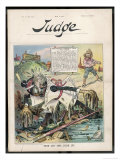
Cesar Chavez and Dolores Huerta co-founded the National Farm Workers Association, which later became the United Farm Workers. The NFWA lead a five year strike and boycott of table grapes that lead to the improvement of working conditions of union farm workers.
• labor history posters
|
|
|
|
A. J. Cronin
b. 7-19-1896; Cardross, Scotland
d. 1-6-1981; Switzerland
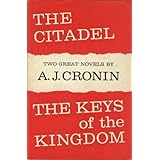
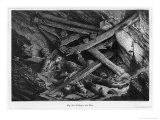
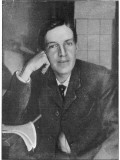
Physician and author A. J. Cronin is noted for his deep social conscience. His novel “The Citadel” questioned occupational hazards of mining and resulted in a free public health service in Britain.
FYI - the film Billy Elliot is inspired in part by Cronin's 1935 novel The Stars Look Down.
|
|
|
|
Emma Goldman
b. 6-27-1869; Lithuania
d. 5-19-1940; Canada
Emma Goldman, an immigrant from Lithuania, found work in a sweatshop as a seamtress like so many others from eastern Europe. The conditions she worked under were harsh and demeaning. The 1886 Chicago Haymarket Rally and its consequences lead Goldman to commit herself to achieving individual liberty and social equality for the working class through anarchy, the abolition of authority.
• Emma Goldman posters
|
|
|
|
Samuel Gompers
b. 1-26-1850; London, England
d. 12-13-1924; San Antonio, Texas (buried in NY)
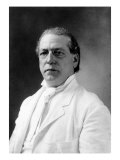
Labor and political leader Samuel Gompers was founder of the American Federation of Labor (AFL).
Samuel Gompers quotes ~
• “What does labor want? We want more school houses and less jails. More books and less guns. More learning and less vice. More leisure and less greed. More justice and less revenge. We want more ... opportunities to cultivate our better natures.”
• “And what have our unions done? What do they aim to do? To improve the standard of life, to uproot ignorance and foster education, to instill character, manhood and independent spirit among our people; to bring about a recognition of the interdependence of man upon his fellow man. We aim to establish a normal work-day, to take the children from the factory and workshop and give them the opportunity of the school and the play-ground. In a word, our unions strive to lighten toil, educate their members, make their homes more cheerful, and in every way contribute an earnest effort toward making life the better worth living.”
• “The trade union movement represents the organized economic power of the workers. Through the development, the organization and the exercise of this economic power the workers themselves establish higher standards of living and work. Although this economic power from the superficial standpoint appears indirect, it is in reality the most potent and the most direct social insurance the workers can establish.”
|
|
|
|
James Hoffa
b. 2-14-1913; Brazil, IN
d. 7-30-1975; Michigan
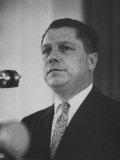
President of the International Brotherhood of Teamsters trade union from the mid-1950s to the mid-1960s, Hoffa is also infamous for his illegal activies and mysterious disappearance.
|
|
|
|
|
|
|
John L. Lewis
b. 2-12-1880; Lucas, IA
d. 6-11-1969; Virginia
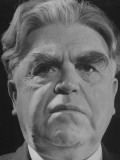
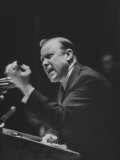
An important figure in the history of coal mining, Lewis served as president of the United Mine Workers of America (UMWA) from 1920 to 1960. He was also the driving force behind the founding of the Congress of Industrial Organizations (CIO).
|
|
|
|
|
|
|
Walter Reuther
b. 9-1-1907; Wheeling, WV
d. 5-10-1970; plane crash, MI
American labor union leader who made the United Automobile Workers (UAW) a major force in the auto industry and the Democratic party in the mid 20th century. He was a supporter of the New Deal coalition.
|
|
|
|
Modern Times (1936)
Charlie Chaplin has his famous ‘Little Tramp’ character struggling to survive in the modern, industrialized world with the desperate employment and fiscal conditions many people faced during the Great Depression. “Modern Times” is one of the movies featuring a dog as Chaplin's faithful companion.
|
|
|
|
Upton Sinclair
b. 9-20-1878; Baltimore, Maryland
d. 11-25-1968
Poster Text: “He was working n the steaming pit of hell; day after day, week after week – until now, there was not an organ of his body that did its work without pain, until the sound of ocean breakers echoed in his head day and night, and the buildings swayed and danced before him as he went down the street.” The Jungle
American author Upton Sinclair achieved much popularity in the first half of the 20th century for his investigations of social conditions, and notariety for his advocacy of socialist views and anarchist causes, such as his arrest for reading the First Amendment (free speech) at a labor rally in 1923. He gained particular fame for his novel, The Jungle, which dealt with conditions in the U.S. meat packing industry and caused a public uproar that contributed to the passage of the Pure Food and Drug Act and the Meat Inspection Act in 1906.
Upton Sinclair wrote more than ninety books, but his most famous is The Jungle. This novel, which exposed the unsanitary conditions of the meatpacking industry in Chicago and the terrible way its workers were treated, caused a national sensation.
When President Theodore Roosevelt read the book, he ordered an investigation that lead to the Pure Food and Drugs Act and the Meat Inspection Act. The Jungle helped make all Americans safer – and it helped make Upton Sinclair famous around the world before he turned 30.
Sinclair was born in Baltimore, Maryland, and grew up in New York City. His father was an alcoholic and his parents were poor, but he spent much of his time with his rich grandparents. He started writing stories for magazines when he was 15, and two years later he was supporting his entire family with the money he made writing. Sinclair's first novel, Springtime and Harvest, was published in 1901. But his life changed forever five years later when The Jungle was published. The novel painted a very realistic picture.
Sinclair actually worked in a meat packing plant so that he could write about the conditions there. With this book, he became one of the best known “muckrakers” – a group of writers who uncovered corruption and dangerous business practices.
Although his next few novels did not sell many copies, Sinclair also became famous for his political career. He was a socialist who believed that businesses and rich people whould have to share their money with the poor. This idea gained a lot of ground during the Great Depression, and Sinclair ran for governor of California twice as a Democrat. Although he lost both times, he received almost 900,000 votes in the 1934 election.
Sinclair continued to work as a novelist and journalist for many years. He won the 1943 Pulitzer Prize for fiction for Dragon's Teeth, a novel about the rise of Nazism in Germany. In 1953, he moved to Buckeye, Arizona, where he lived until his death in 1968.
• Writers Who Changed the World posters
|
|
|
|
Crystal Lee Sutton
b. 12-31-1940; North Carolina
d. 9-11-2009; Burlington, NC
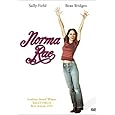
Cryatal Lee Sutton was a union organizer and advocate who was fired from her job at the J.P. Stevens plant in Roanoke Rapids, North Carolina for trying to unionize its employees was inspiration for the 1970s movie Norma Rae.
|
|
previous page | top | Images of Labor 1 | Labor History 2 | 3 | 4 slavery | money
|
|
I have searched the web for visual, text, and manipulative curriculum support materials - teaching posters, art prints, maps, charts, calendars, books and educational toys featuring famous people, places and events - to help teachers optimize their valuable time and budget.
Browsing the subject areas at NetPosterWorks.com is a learning experience where educators can plan context rich environments while comparing prices, special discounts, framing options and shipping from educational resources.
Thank you for starting your search for inspirational, motivational, and educational posters and learning materials at NetPosterWorks.com. If you need help please contact us.
|
|
|