|
|
State of Texas Posters, Prints, Photographs, Maps, & Calendars
for educators and home schoolers; themed decor in studio or office.
|
geography > NA > US > S > TEXAS < social studies
|
|
Texas, known as the “Lone Star State” because it was once an independent nation, joined the Union on December 29, 1845 as the 28th state after being under the Spanish, French and Mexican rule; the flag of the Confederate States of America makes the 6th national flag over Texas.
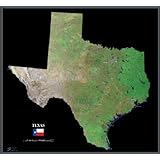
Texas is the second largest state by area in the US, after Alaska, and population, after California. The name Texas comes from the Native American Caddoan language and means ‘friend’.
Texas is bordered by New Mexico on the west, Oklahoma to the north, with Arkansas to the northeast and Louisiana to the east.
Big enough to contain both Spain and Florida, Texas defies generalization. So do Texans, who vary ethnically as much as their land does physically and who, it is said, identify first with their region, then with state, and finall with nation. The stereotypical Texan – rich, brash, a cowboy-cum-wheeler-dealer-oilman – is a legend born of the drama of Texas history and nurtured today in the national imagination.
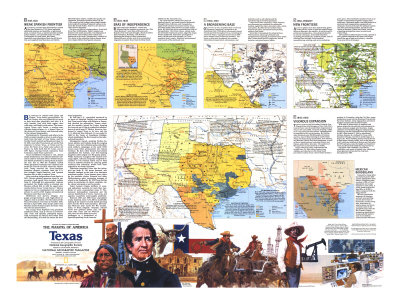
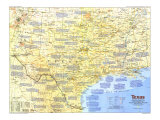
Exploration by Coronado and others in the 1540s revealed no gold or silver to entice Spaniards from the heart of New Spain, and the frontier barely inched northeastward (map 1). In 1685, soon after Franciscans set up the first missions in future Texas, at Ysleta and socorro, the Sieur de La Salle came ashore for France. La Salle built Fort St. Louis, and in 1691 Spain, fearing French expansion from Louisiana, made Texas a province.
Texas nonetheless remained a vast, almost empty borderland, its scattered missions subject to raids by nomadic tribes. Neither France nor Britain presented a strong threat to Spanish rule, but 1803 the youthful United States purchased Louisiana and claimed land to the Rio Grande. By 1819, when the Adams-Onis Treaty resolved the Texas-Louisiana boundary dispute, squatters from the U. S. had brought Anglo-American and Spanish frontiers face to face in eastern Texas.
After wresting independence from Spain in 1821, Mexico granted generous tracts to impresarios, land agents who recruited settlers (map 2). Although few empresarios'colonies succeeded, the Anglo influx so alarmed one Mexican official that in 1830 he urged interventions before Texas “is lost forever”. Mexico imposed aa ban on immigration but could not enforce it, and by 1835 Anglos outnumbered Mexicans more than nine to one.
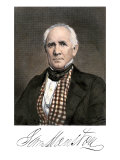
Differences over slavery, religion ,language, and government – and Anglo ethnic arrogance – led to conflict. The first shots of the Texas Revolution were fired in October 1835, the last in April 1836, when troops under Sam Houston routed Antonio Lopez de Santa Anna near the San Jacinto River.
The young Texas Republic had grandiose ambitions. But as an economically weak and sparsely populated region, with reconquest by Mexico and Indian raids still threatening, it lacked the meas for territorial expansion.
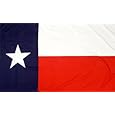
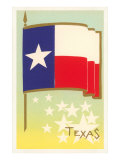
By 1845 the U. S., compelled westward by its sense of Manifest destiny and concerned that Texas would align with Britain or France, had decided for annexation. Texans voted, and the republic joined the union, keeping the lone star on its flag to symbolize independence of spirit (map3). Mexioc, however, continued to regard Texas as its own, and the U. S.-Mexican War followed. It was ended in 1848 by the Treaty of Guadalupe Hidalgo, which established the Rio Grande as the international boundary.
Immigration soured, sparing friction between settlers and Indians along the surging frontier. Army forts afforded some protection, until military campaigns in the early 1870s forced most tribes permanently into Indian Territory. By then white hunters had almost annihilated the buffalo, and free-roaming longhorn cattle ranged over the grassy plains. While stockmen wrangled with farmers over range rights, railroad companies competed feverishly to win internal traffic and to bind Texas to natioanl markets by carrying good overland that otherwise would have been shipped by sea from Galveston.
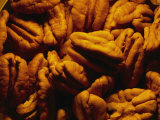
Petroleum propelled Texas into the industrial age. Oil towns boomed, and Houston emerged s the hub of an interstate petroleum empire. Texas farmers grew cotton on the southern plains; Kansans and other Midwesterners grew increasing acreages of wheat in the Panhandle. By 1950 Texas led the nation in production of cotton, sorghum, cattle, sheep, and goats as well as pecans.
Today (1986 figures) farmers irrigate millions of acres, and agriculture accounts for more than two-thirds of water consumption. Phenomenal metropolitan expansion and the uneven distribution of rivers, reservoirs, and aquifers exacerbate water-supply problems.
Between 1850 and 1980 Texas' population nearly doubled, from 7,711,00 to 12,228,000, making it the nation's second fastest growning state and the third most populous. Job-seeing Mexicans pour across the Rio Grande, many of them illegally. Hispanic citizens wield new political power and, 150 years after Texas cast off Mexican rule, the Lone Star State faces new chanllenges as a borderland of spanish-speaking North America.
|
|
|
|
|
|
|
|
|
|
|
|
|
|
|
|
|
|
|
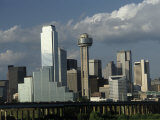
Dallas, the third largest city in the US state of Texas (after Houston and San Antonio), was founded in 1841.
First a center for cotton and oil industries with the help of railroads, Dallas is an international port due to its airport, with an economy based in banking, telecommunications, and computer technology.
|
|
|
|
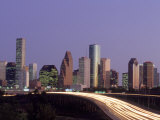
Houston is the largest city in the state of Texas, and the fourth-largest city in the United States.
The city was named after Sam Houston, the President of the Republic of Texas.
Notable people associated with Houston include Howard Hughes, Barbara Jordan, Mary Kay Ash, James Baker, Denton Cooley, Red Adair, Tommy Tune, Patrick Swayze, Walter Cronkite, A.J. Foyt, Debbie Allen & Phylicia Rashad.
|
|
|
|
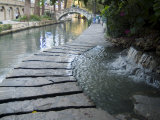
San Antonio, in the state of Texas, is one of the fastest growing cities in the U.S. It is famous for its River Walk and the Alamo.
San Antonio was founded on the feast day of St. Anthony of Padua, June 13, 1691 by Spanish explorers and missionaries at the site of a Native American settlement called Yanaguana (“refreshing waters”).
Notable people associated with San Antonio include Jovita Idar, Davy Crockett.
|
|
|
|
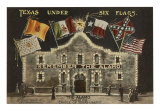
Texas Under Six Flags - France, Spain, Mexico, The Republic of Texas, The Confederate States of America, and the United States of America.
FYI - Hawaii was a monarchy until 1899, and Vermont citizens governed themselves an as independent republic from 1777 to 1791.
|
|
|
|
|
|
|
|
|
|
|
|
|
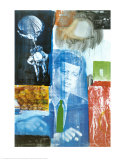
Robert Rauschenberg
b. 10-22-1925; Port Arthur, TX
d. 5-12-2008; Florida (heart)
Robert Rauschenberg is best remembered for his “combines” where he used non-traditional materials and objects in new combinations.
|
|
|
previous page | top
|
|
I have searched the web for visual, text, and manipulative curriculum support materials - teaching posters, art prints, maps, charts, calendars, books and educational toys featuring famous people, places and events - to help teachers optimize their valuable time and budget.
Browsing the subject areas at NetPosterWorks.com is a learning experience where educators can plan context rich environments while comparing prices, special discounts, framing options and shipping from educational resources.
Thank you for starting your search for inspirational, motivational, and educational posters and learning materials at NetPosterWorks.com. If you need help please contact us.
|
|
|