|
|
|
|
|
|
|
|
|
|
|
|
BOOKS ABOUT
SPAIN &
SPANISH CULTURE
|
|
|
|
|
|
|
|
|
|
|
|
|
|
|
|
|
|
|
|
|
|
|
|
|
|
|
|
|
 |
|
|
|
|
|
|
|
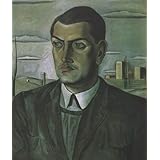
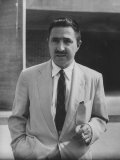
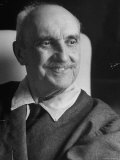
Luis Buñuel
b. 2-22-1900; Calanda, Teruel, Spain
raised in Zaragoza
d. 7-29-1983; Mexico City, Mexico
Filmmaker Luis Buñuel was called “an iconoclast, moralist, and revolutionary who was a leader of avant-garde surrealism in his youth and a dominant international movie director half a century later” by the New York Times.
Buñuel was friends with artist Salvador Dali and poet Federico García Lorca.
|
|
|
|
|
|
|
|
|
|
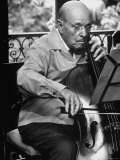
Pablo Casals (Pau Casals i Defilló)
b. 12-29-1876; El Vendrell, Catalonia, Spain
d. 10-22-1973; San Juan, Puerto Rico
Musician Pablo Casals, regarded as the pre-eminent cellist of the first half of the 20th century, and one of the greatest cellists of all time, was also a composer - one of his last compositions was the “Hymn of the United Nations”.
Among the notable people Casals played for were Queen Victoria and Presidents Theodore Roosevelt (1904) and John F. Kennedy (1961).
|
|
|
|
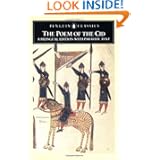
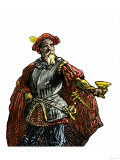
El Cid
c. 1043; Vivar
d. 7-10-1099; Valencia
The life of military leader Rodrigo Díaz de Vivar, better remembered as El Cid, is the basis of the epic poem, El Cantar de Myo Cid (The Song of My Lord or The Lay of the Cid). He was an important figure in the Spanish fight against the Moors.
FYI - El Cid comes from the Spanish article El (The) and the Arabic word I which means Lord or Master.
El Cid's warhorse was named Babieca; his swords, Tizona and Colada.
|
|
|
|
Antonio Gaudi
b. 6-25-1852; Catalan, Spain
d. 6-10-1926; Barcelona
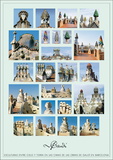
Antonio Gaudi, notable for his unique style and highly intricate designs, was afflicted with inflammation of the joints from childhood, making moving about painful and thus providing the opportunity to look carefully and think creatively rather than rushing around.
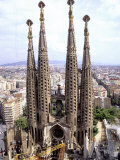
Gaudi's careful observations of nature, the Spanish gothic style, and his faith are expressed in the massive Sagrada Famila Catholic church in Barcelona, under construction since 1882.
• Antonio Gaudi: Master Architect
|
|
|
|
|
|
|
Isabella of Castile
b. 4-22-1451; Madrigal de las Altas Torres, Avila
d. 11-26-1504; buried in Granada
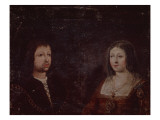
Isabella's marriage to Ferdinand of Aragon politically unified Spain: together they drove out the Moors and presided over the notorious Inquisition, an ethnic cleansing of anyone not of Catholic faith, and earned the name the “Catholic Monarchs”.
Isabella is also responsible for financing Columbus' voyage and later explorations to the New World. One could think that the conquistadors treatment of the indigenous peoples of the New World was an extention of the Inquisition.
Their youngest daughter, Catherine of Aragon, was the first wife of Henry the VIII (their daughter Mary I of England, became known as “Bloody Mary” for her persecutions of Protestants), another daughter, Juana (“the Mad”), was the mother of Charles V, Holy Roman Emperor.
|
|
|
|
Francisco Goya
b. 3-30-1746; Fuendetodos, Aragón, Spain
d. 4-16-1828; Bordeaux, France
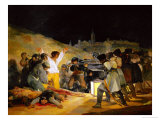
Painter and printmaker Francisco Goya is considered to be one of the last Old Masters and one of the first of the modern artists.
|
|
|
| Juan Ramón Jiménez |
|
|
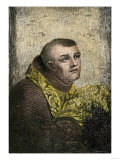
St. John of the Cross
born Juan de Yepes y Álvarez
b. 1542; Fontiveros, Ávila, Spain
d. 12-14-1591; Úbeda, Jaén
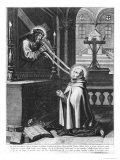
A Carmelite friar and priest, reformer, and mystic St. John of the Cross, is also known for his poetry and studies of the soul. He is one of the thirty-five Doctors of the Church.
|
|
|
|
El Greco, née Domenikos Theotokopoulos
b. 1541; Kingdom of Candia (modern Crete)
d. 4-7-1614; Toledo, Spain
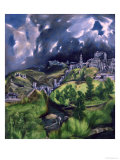
El Greco, “the Greek”, was a noted painter, sculptor and architect in the Spanish Renaissance period. He was trained as an icon painter, his family probably of the Greek Orthodox tradition.
His best know works were produced in Toledo, where he moved after living and working in Venice, Rome, and Madrid.
His elongated figures and fantastic colors are now regarded as forerunners of Expressionism and Cubism. Some have attributed the distortions to astigmatism.
|
|
|
|
St. Ignatius of Loyola
b. 4-20-1491; Barcelona, Spain
d. 12-25-1556; Rome
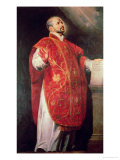
Ignacio López de Loyola was the founder of the Jesuits Order. A knight who experienced a conversion while recuperating from battle wounds, Ignatius is a patron saint of soldiers.
• more Christianity posters
|
|
|
|
Lope de Vega
b. 11-25-1562; Madrid, Spain
d. 8-27-1635, Madrid
Lope Felix de Vega y Carpio, one of the most prolific authors in the history of literature, was an important playwright and poet of the Spanish Golden Century Baroque literature, second only to Cervantes.
• Three Major Plays of Lope de Vega
|
|
|
|
Joan Miro
b. 4-20-1893; Barcelona, Catalonia, Spain
d. 12-25-1983; Palma, Majorca, Spain
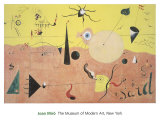
Surrealist Joan Miro paints with childlike exuberance in joyful rebellion against conventional painting methods. Influenced by the 1920’s Paris counterculture, his art is filled with wonderful absurdity. He often uses primary and secondary colors as well as organic shapes to convey a lively, energetic zest for life – beyond mere child’s play.
|
|
|
|
|
|
|
Pablo Picasso
b. 10-25-1881; Málaga, Andalusia, Spain
d. 4-8-1973; Mougins, France
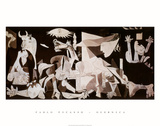
Pablo Ruiz Picasso was one of the 20th Century's most recognized artists. Picasso was best known as a painter, and along with Georges Braque, founded Cubism where objects are “taken apart” and reassembled to depict the subject from multiple perspectives at one moment. Picasso also was a printmaker and sculptor.
• more Pablo Picasso posters
|
|
|
|
Francisco Pizarro
b. c. 1475, Trujillo, Crown of Castile, Spain
d. 6-26-1541; Lima, New Castile (assassinated)
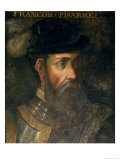
Conquistadore Francisco Pizarro, who was the illegitimate son of an infantry colonel and grew up illiterate in modern day Extremadura, was tempted by the opportunities in the New World to improve his position.
Pizzaro was with Balboa in crossing the Isthmus of Panama to the Pacific Ocean, later he formed expeditions to western South America, conquered the area known today as Peru, and was killed by supporters of Diego Almagro II.
FYI - Pizarro was a distant cousin of Hernan Cortez.
|
|
|
|
|
|
|
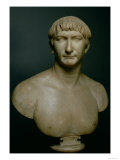
Seneca
b. c. 4 BC; Cordoba, Hispania (?)
d. 65 AD
Roman Stoic philosopher, statesman, dramatist, and humorist, Seneca the Younger, was tutor and later advisor, to emperor Nero.
Seneca was forced to commit suicide for allegedly conspiring to assassinate Nero (he may have been innocent).
Seneca quotes ~
• “It is not because things are difficult that we do not dare, it is because we do not dare that they are difficult.”
• “A great fortune is a great slavery.”
• “A gem cannot be polished without friction, nor a man perfected without trials.”
• “As long as you live, keep learning how to live.”
• “A sword never kills anybody; it is a tool in the killer's hand.”
• “A person's fears are lighter when the danger is at hand.”
• “A quarrel is quickly settled when deserted by one party; there is no battle unless there be two.”
|
|
|
|
Father Junipero Serra
b. 11-24-1713; Petra, Majorca, Spain
d. 8-28-1784; Mission San Carlos Borromeo de Carmelo in California
Father Junipero Serra founded a chain of 21 missions in Alta (upper) Californina, present day state of California, beginning at the Mission San Diego de Alcalá, on July 1, 1768.
|
|
|
|
Juan Ponce de Leon
b. 1474; Santervás de Campos, Castile, Spain
d. July, 1521; Havana, Cuba
Spanish conquistador Juan Ponce de León was on the second voyage of Christopher Columbus and became the first Governor of Puerto Rico by appointment of the Spanish Crown. He is notable in Florida history as the first known European exploration (1513) and calling the land “La Florida” and the legend of the Fountain of Youth.
• famous explorers posters
• more Hispanic Heritage posters
|
|
|
|
George Santayana
b. 12-16-1863; Avila, Spain
d. 9-26-1952; Italy
George Santayana was a poet, novelist, essayist and philosopher known for his remark, ”Those who cannot remember the past are condemned to repeat it,” from Reason in Common Sense.
George Santayana quotes ~
• “A child educated only at school is an uneducated child.”
• “A soul is but the last bubble of a long fermentation in the world.”
• “An artist is a dreamer consenting to dream of the actual world.”
• “Chaos is a name for any order that produces confusion in our minds.”
• “Depression is rage spread thin.”
|
|
|
|
|
|
|
Miguel de Unamuno
b. 9-29-1864; Bilbao, Biscay, Basque Country, Spain
d. 12-31-1936
Miguel de Unamuno y Jugo was a philosopher and writer. He was opposed to Franco and died under house arrest in 1936.
Miguel de Unamuno quotes ~
• “Art distills sensations and embodies it with enhanced meaning.”
• “True science teaches, above all, to doubt and to be ignorant.”
• “Cure yourself of the affliction of caring how you appear to others. Concern yourself only with how you appear before God, concern yourself only with the idea that God may have of you.”
• “There is no true love save in suffering, and in this world we have to choose either love, which is suffering, or happiness. Man is the more man - that is, the more divine - the greater his capacity for suffering, or rather, for anguish.”
• “Faith which does not doubt is dead faith.”
• “It is sad not to love, but it is much sadder not to be able to love.”
• “Suffering is the substance of life and the root of personality, for it is only suffering that makes us persons.”
• “Some people will believe anything if you whisper it to them.”
• “That which the Fascists hate above all else, is intelligence.”
• “If a person never contradicts himself, it must be that he says nothing.”
• Tragic Sense of Life by Unamuno
|
|
|
|
Diego Velázquez
b. 6-6-1599; Seville, Spain
d. 8-6-1660; Madrid
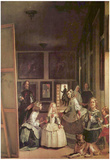
Diego Velázquez was the leading artist in the Spanish court of King Philip IV.
His 1656 group portrait, Las Meninas (The Maids of Honour), is one of the most studied works in Western Painting.
|
|
|
previous page | top
geography > Europe > Spain & Spanish Culture | Spain Cities (la ciudad) | LIST NOTABLE SPANIARDS | maps < social studies
|
|
I have searched the web for visual, text, and manipulative curriculum support materials - teaching posters, art prints, maps, charts, calendars, books and educational toys featuring famous people, places and events - to help teachers optimize their valuable time and budget.
Browsing the subject areas at NetPosterWorks.com is a learning experience where educators can plan context rich environments while comparing prices, special discounts, framing options and shipping from educational resources.
Thank you for starting your search for inspirational, motivational, and educational posters and learning materials at NetPosterWorks.com. If you need help please contact us.
|
|
|


 Herzegovina